
one pixel is imagined. one thread is dreamt.
nanna debois buhl
12 april–25 may 2024

One pixel is imagined. One thread is dreamt.
Nanna Debois Buhl
The history of textiles runs hand in hand with abstraction, cutting diagonally through cultures, disciplines, and technological innovations. The avant-garde’s pictorial move away from figuration has often been linked to the rise of mechanical labor in post-industrial economies, while the Bauhaus weaving workshop’s practical and theoretical movement pushed abstraction beyond representational questions towards procedural, functional, and material concerns.
The division of labor in post-industrial economies is another form of abstraction that intersects the modern trajectory of textiles. Rooted in traditional production and long associated with ‘female work’, mechanized weaving became central for analyzing work in capitalist economies. Charles Babbage, who famously invented his proto-computer inspired by the Jacquard loom, wrote extensively on task specialization from observing industrial textile plants, noting its potential to measure production processes. And yet, for machinery to replace human labor, this must first be made mechanical, abstracted, and arranged into replicable patterns, making automation not merely the application of computation onto the physical realm but rather a transformation of existing material practices. Today, this confluence of material and abstract means of production grows increasingly complex with the exponential acceleration of IT-driven automation and the pervasiveness of algorithms.
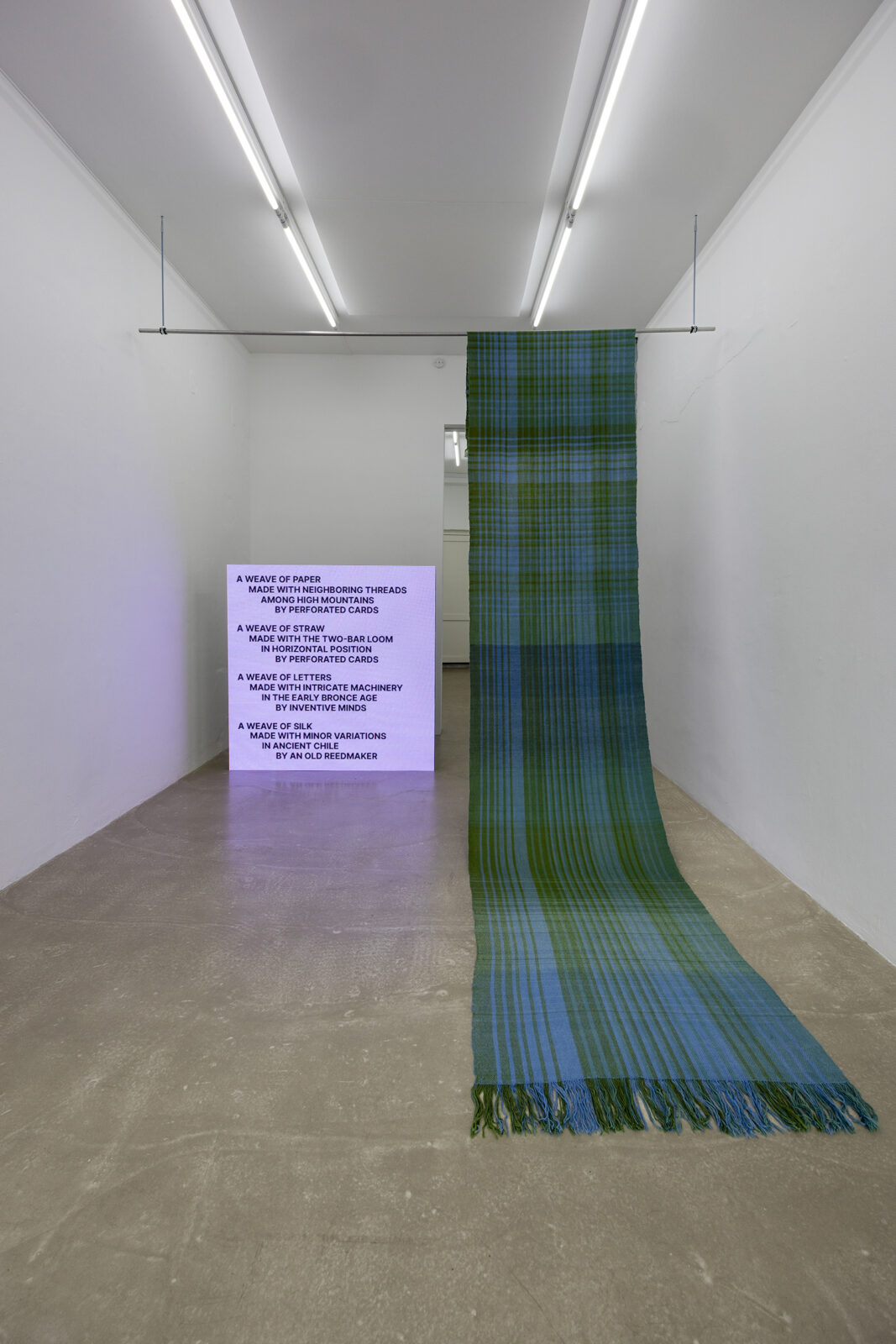
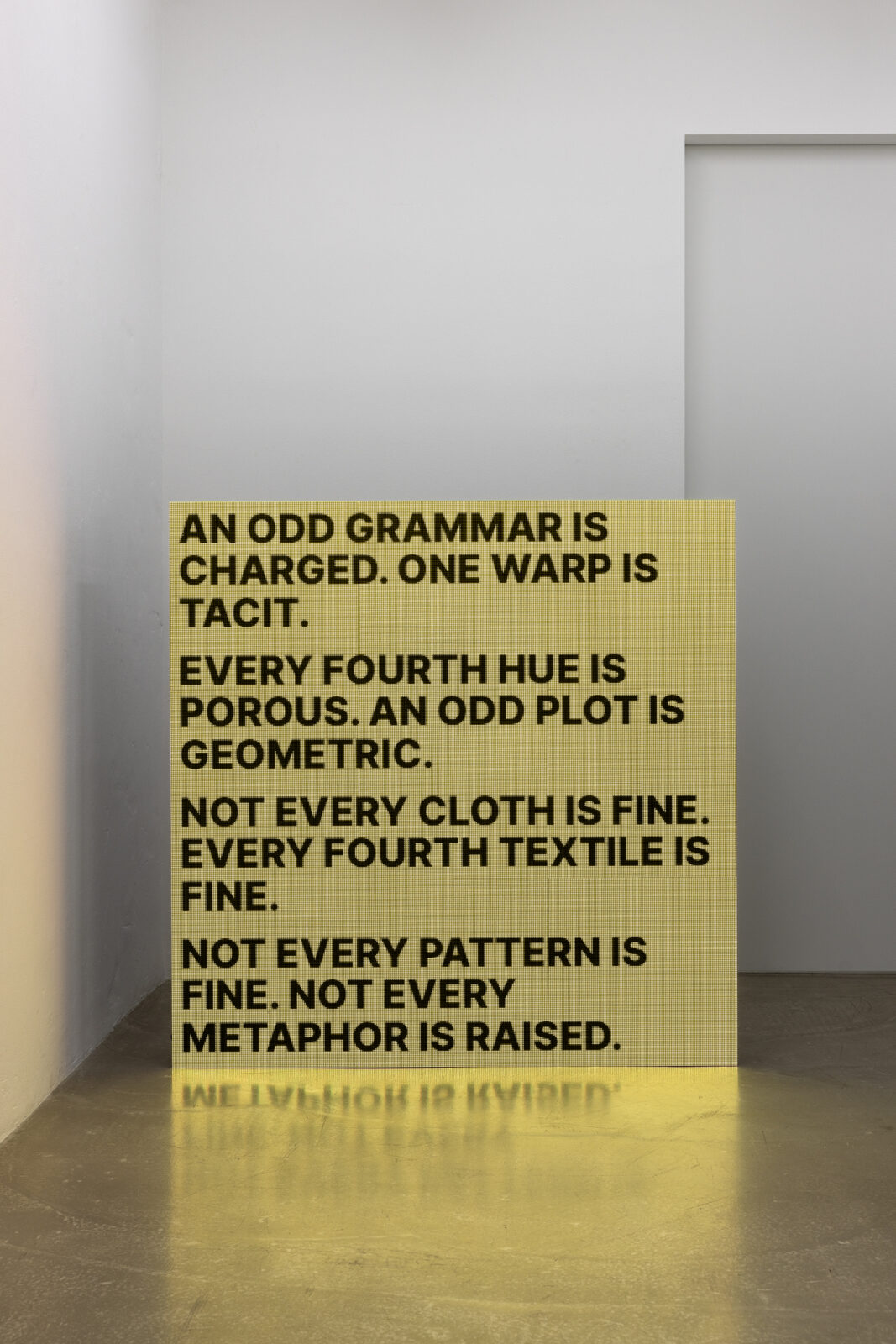
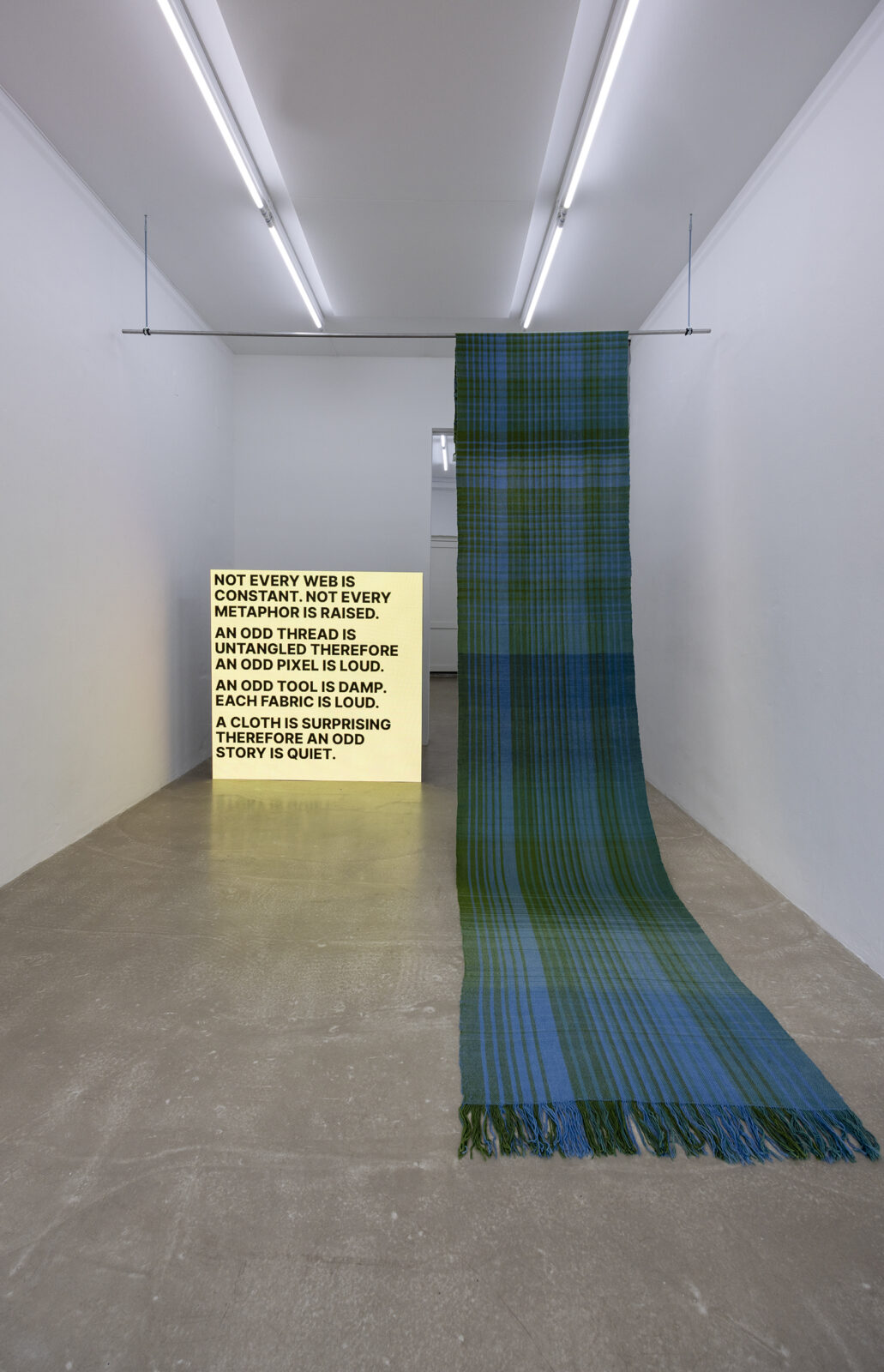
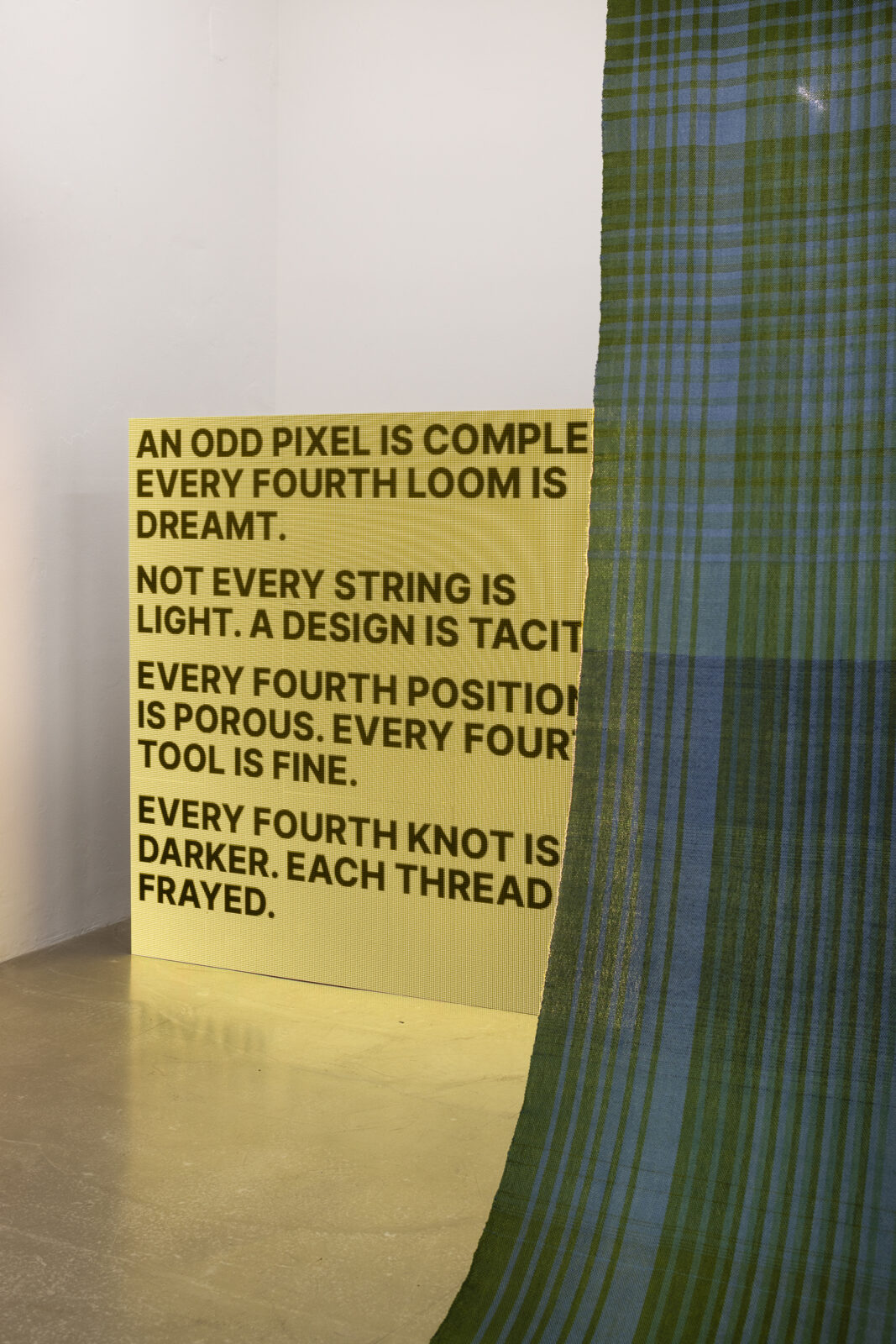
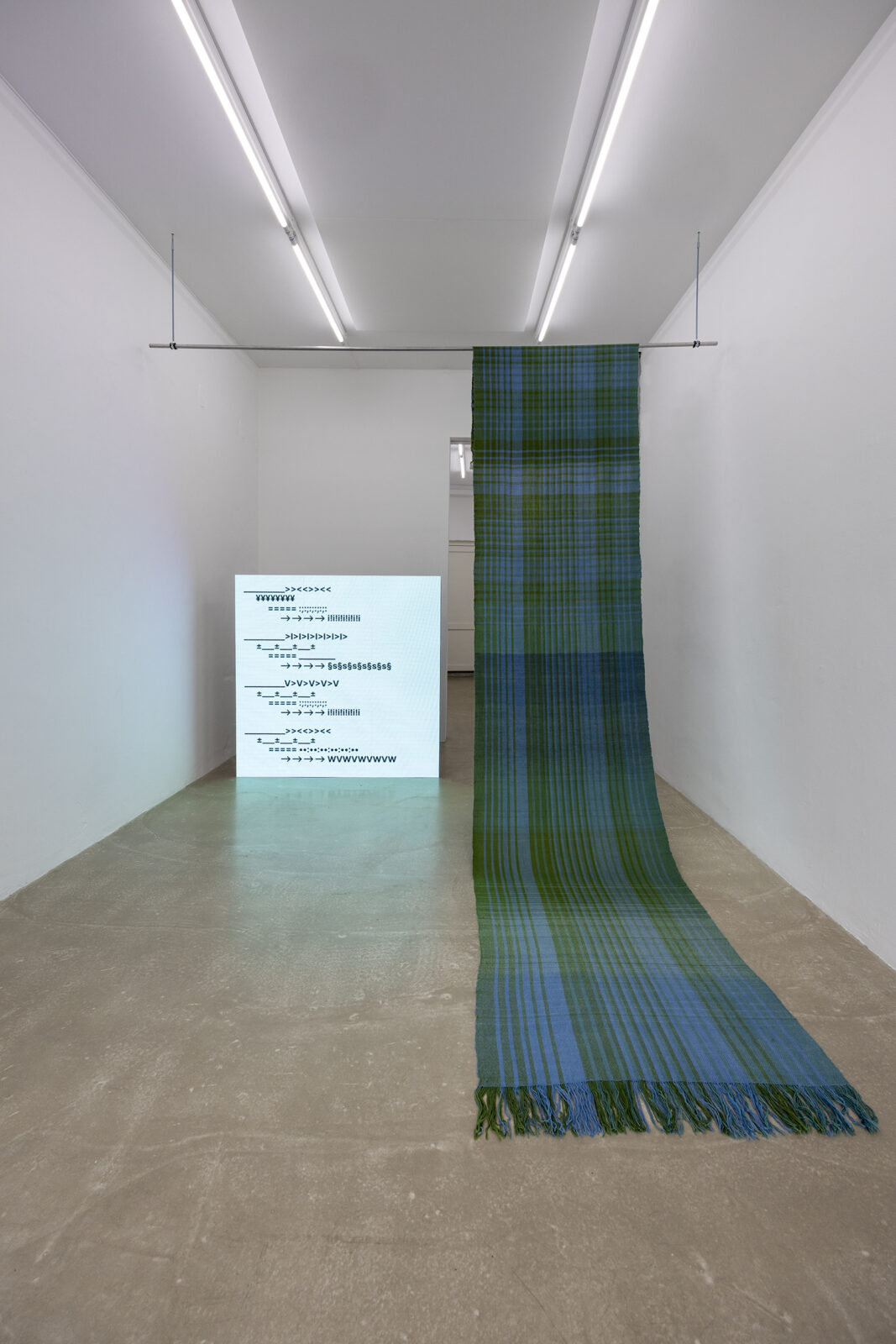
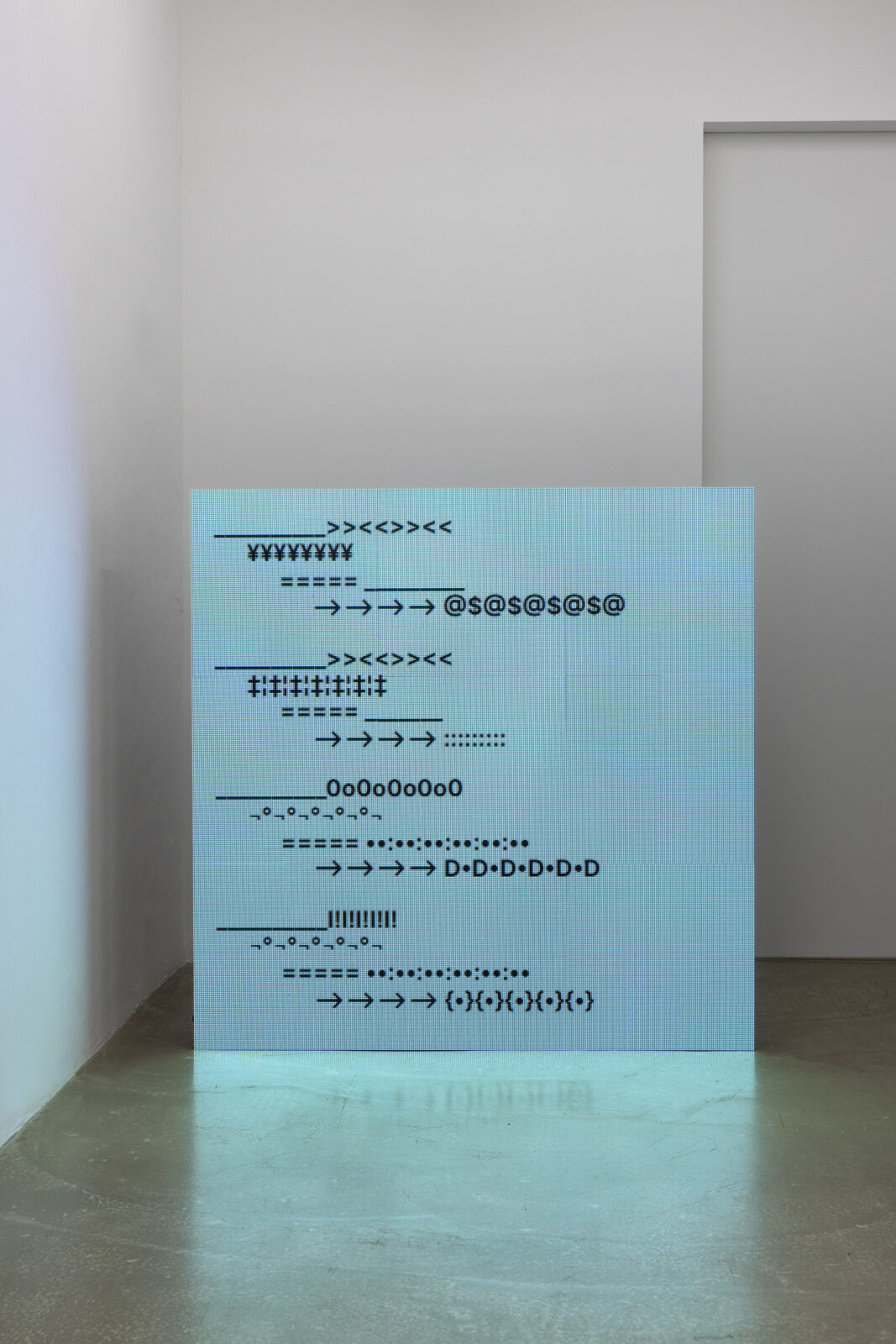
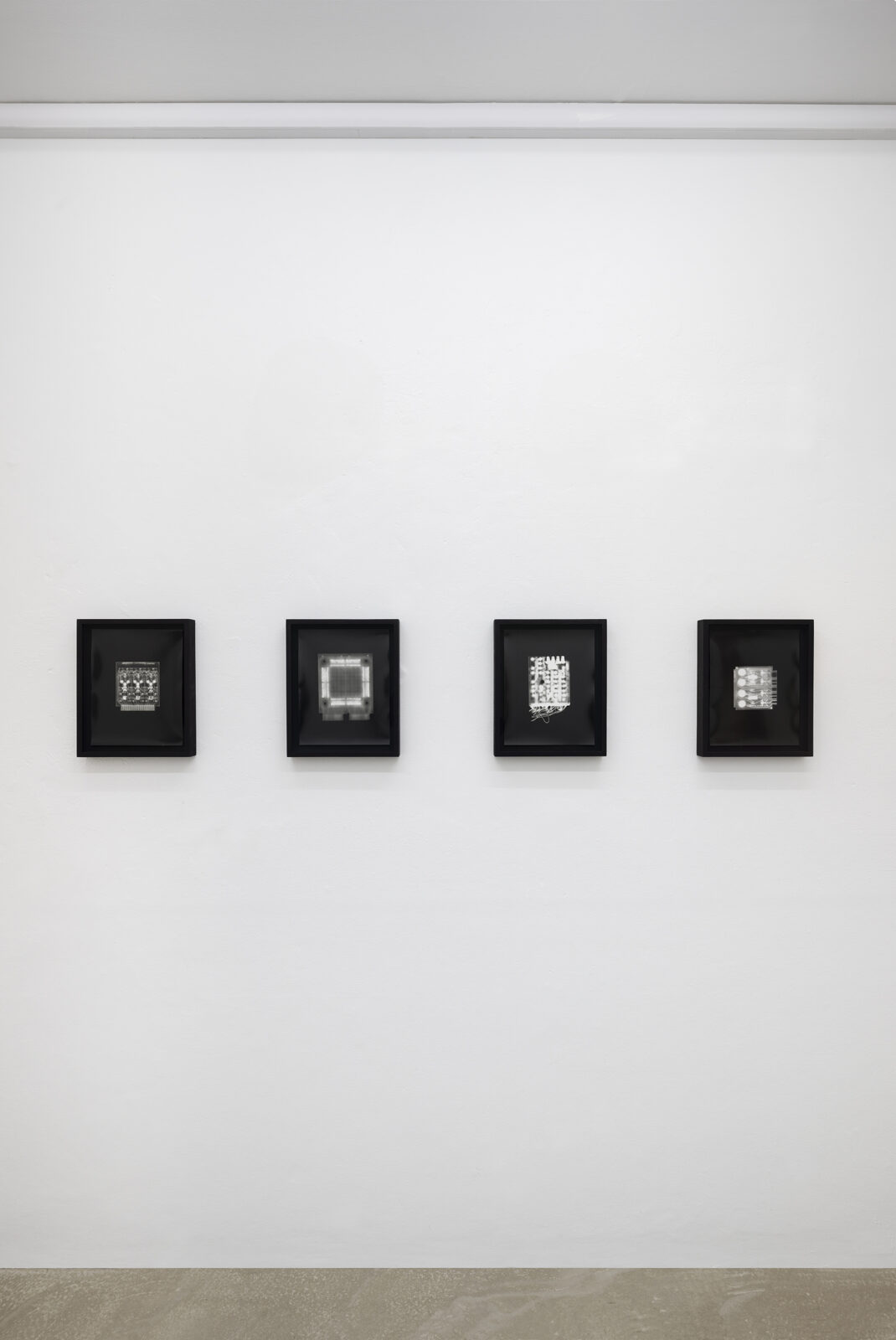
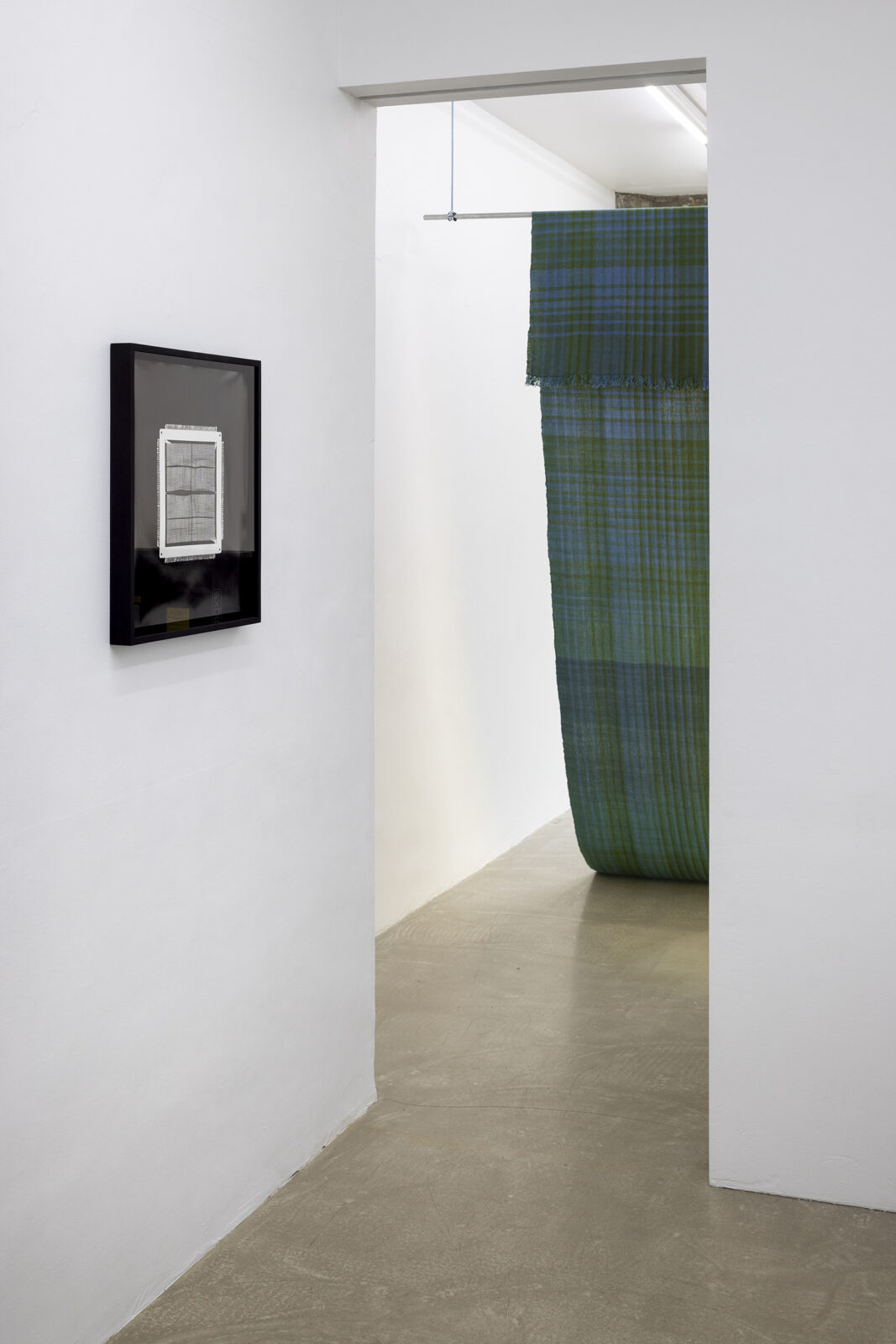
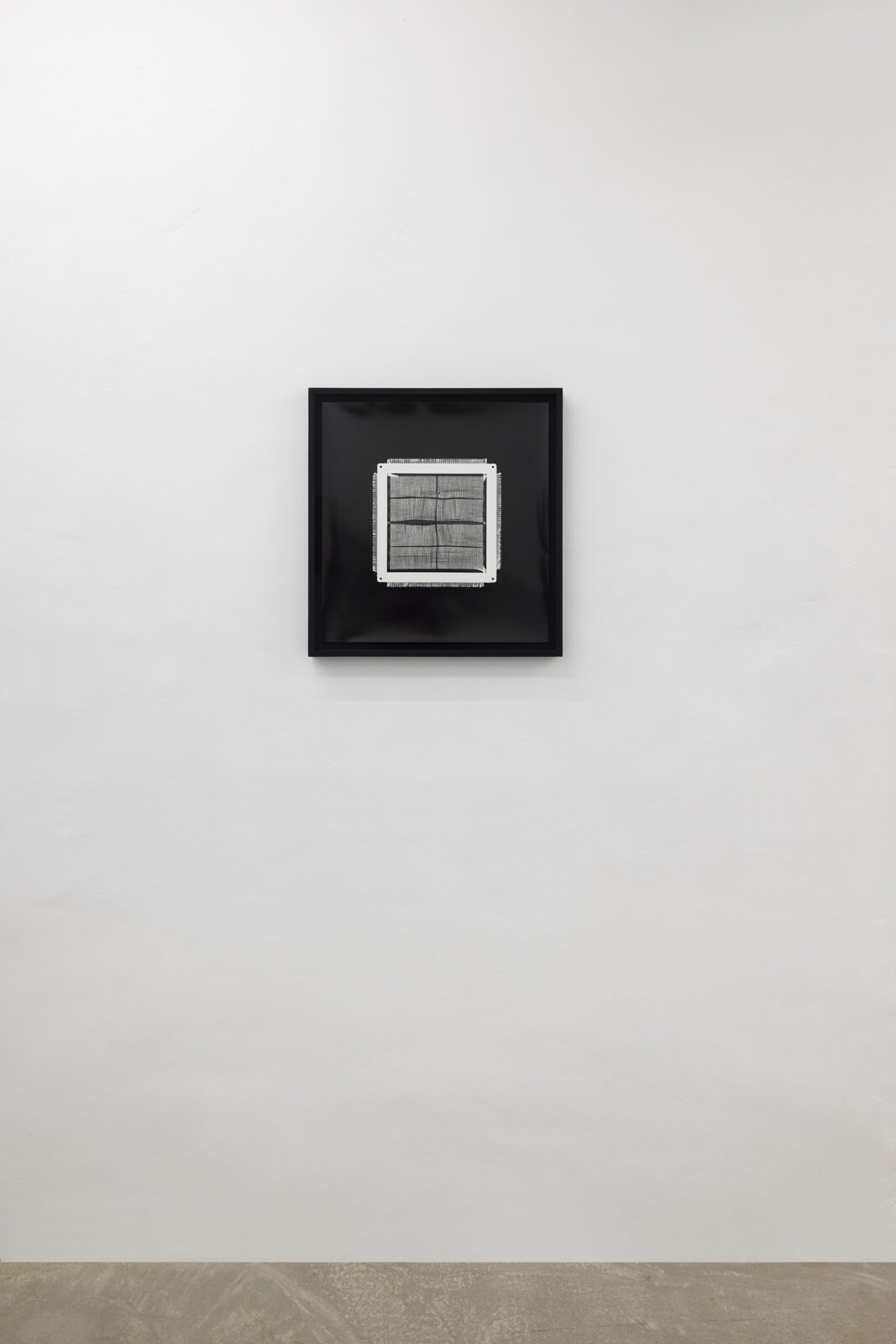
The artworks in the exhibition explore the interplay of material and abstract practices through strategies that intertwine the computational processing of weaving-related data with chemical reactions evocative of quasi-magical phenomena. On an LED screen facing the gallery’s window, seven artist-coded generative algorithms, inspired by early computer art and system-based poetry, continually elaborate linguistic content drawn from various texts on weaving. Each algorithm is programmed for a day of the week, shifting at midnight. At the opposite end of the space, five photograms, a technique where exposure to light creates images directly on photographic paper, show lacy, hand-woven wiring of computer memory and electronic parts allegedly belonging to NASA’s Apollo missions’ computers.
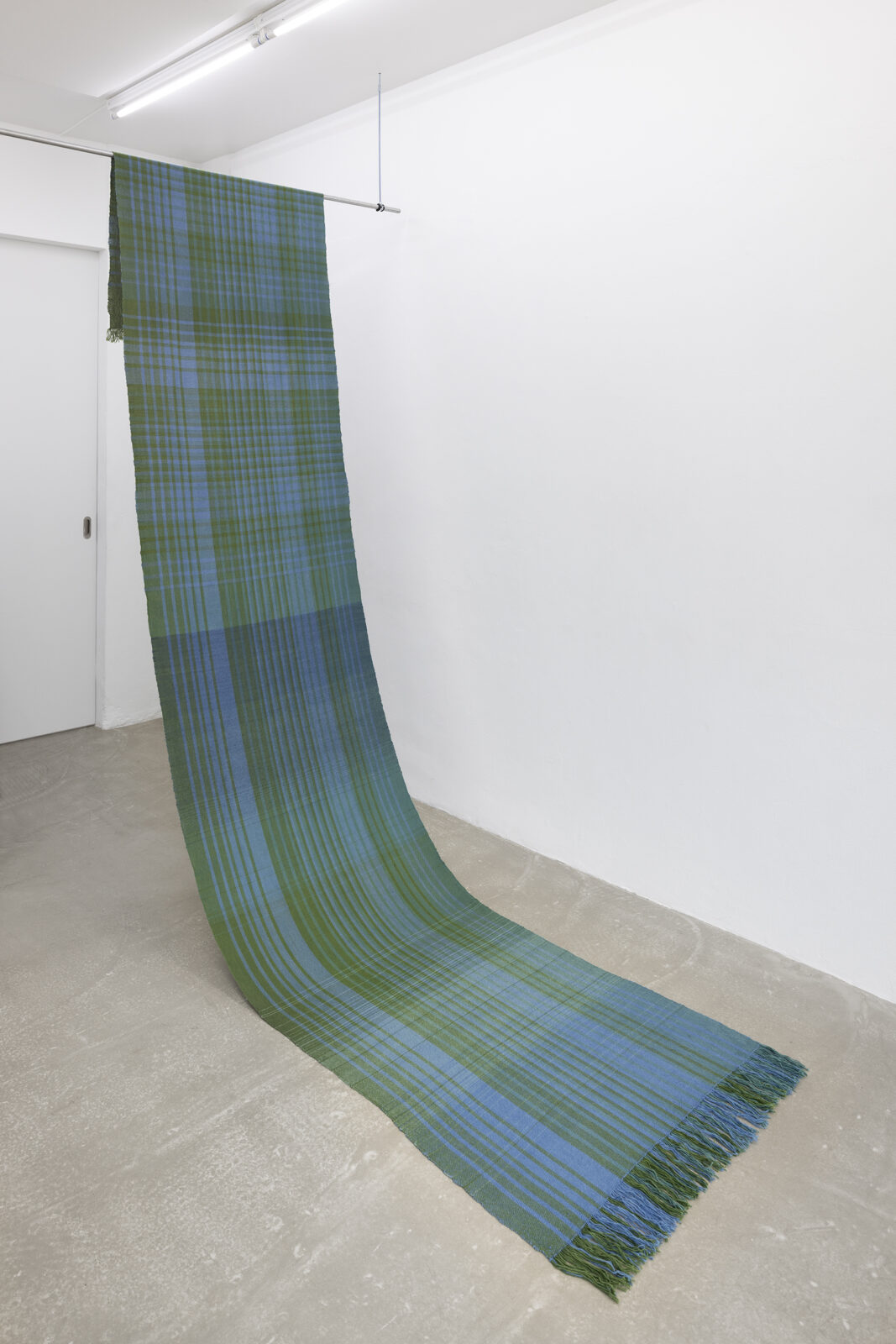
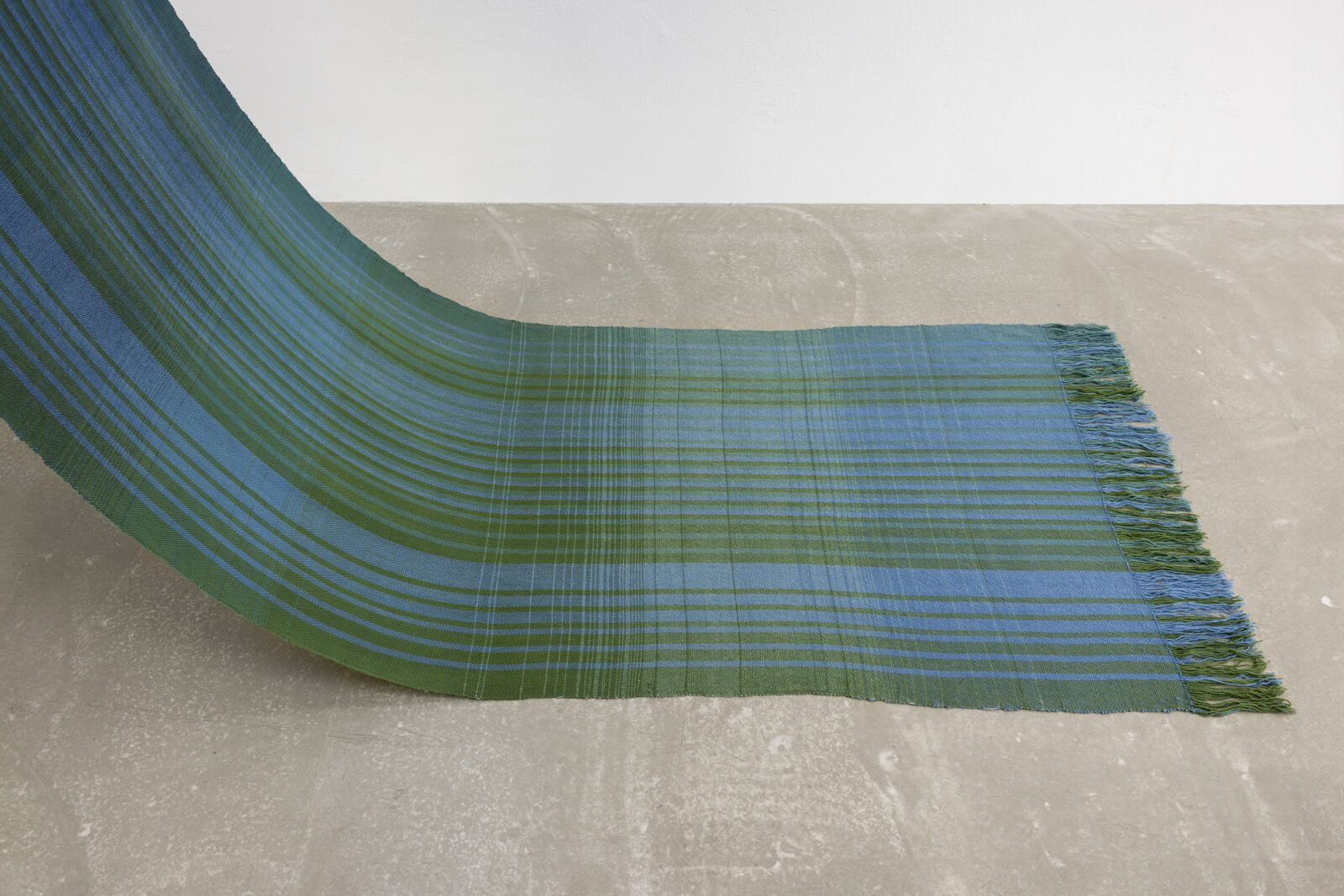
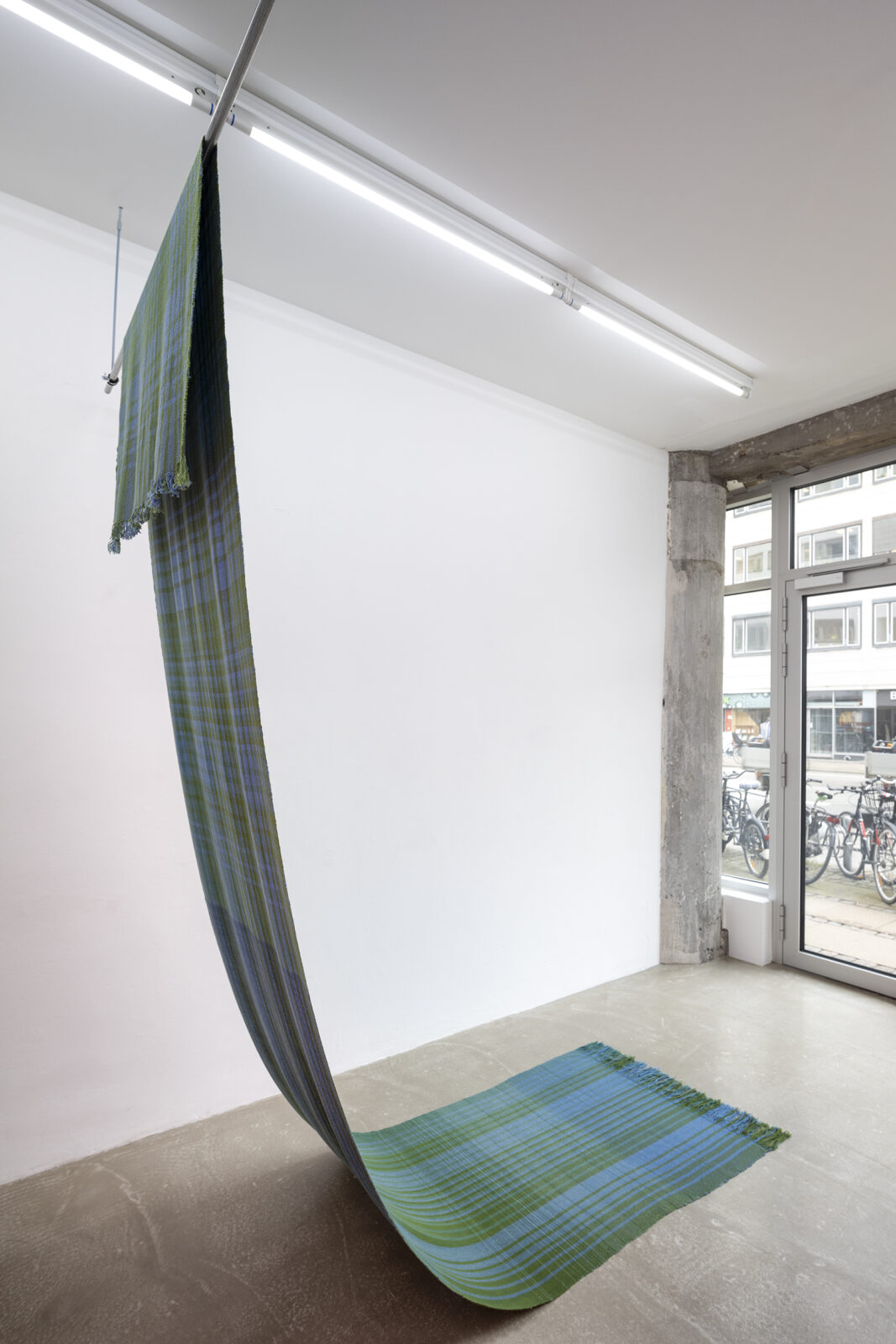
A long textile, hand-crafted by the artist on a shaft loom, display variations of the equation (A+B+C)3 inspired by mathematician and weaver Ada Dietz’s threading patterns. Woven with plant-dyed yarn and later dipped in indigo, the piece merges the convertibility, coding, and relational logic of information processing with the transmutative, almost alchemical qualities of indigo dyeing. Both catalyzed by exposure to air and light, indigo dye and photogram techniques share a sense of wonder and unpredictability, qualities that resonate obliquely with generative algorithms, where simple coding directives can prompt surprising outcomes and connections beyond the coder’s control.
The interaction between the calculated precision of computational machines, traditional forms of material labor and the organic metamorphosis of light speaks to a broadening understanding of labor and intelligence. The roots of automation in the abstraction of work systems suggest that algorithms do more than just perform tasks – within a reductionist order, they also reflect and limit our understanding of human capabilities. But what happens when a ray of light interferes with the computational measure of productivity? A recent study on large language models’ performativity shows that they do slightly better in May than in December. Does this baffling outcome mirror how the seasonal rhythms in the Northern Hemisphere might have affected the researchers’ work, or, as it has been suggested, have the systems linguistically internalized and abstracted the winter holidays?
By Francesca Astesani