
neighbors
jasmin werner
31 january–22 february 2025







Neighbors
Jasmin Werner
It’s no secret that they’re getting closer than ever. They see each other more and more. They’re clued-in and aware of their own boundaries or, in fact, their total lack of boundaries. They’re wide open and cannot live without each other. They connect so much you’d think it was a dazzling love story; conversations truly are never-ending and around the clock.
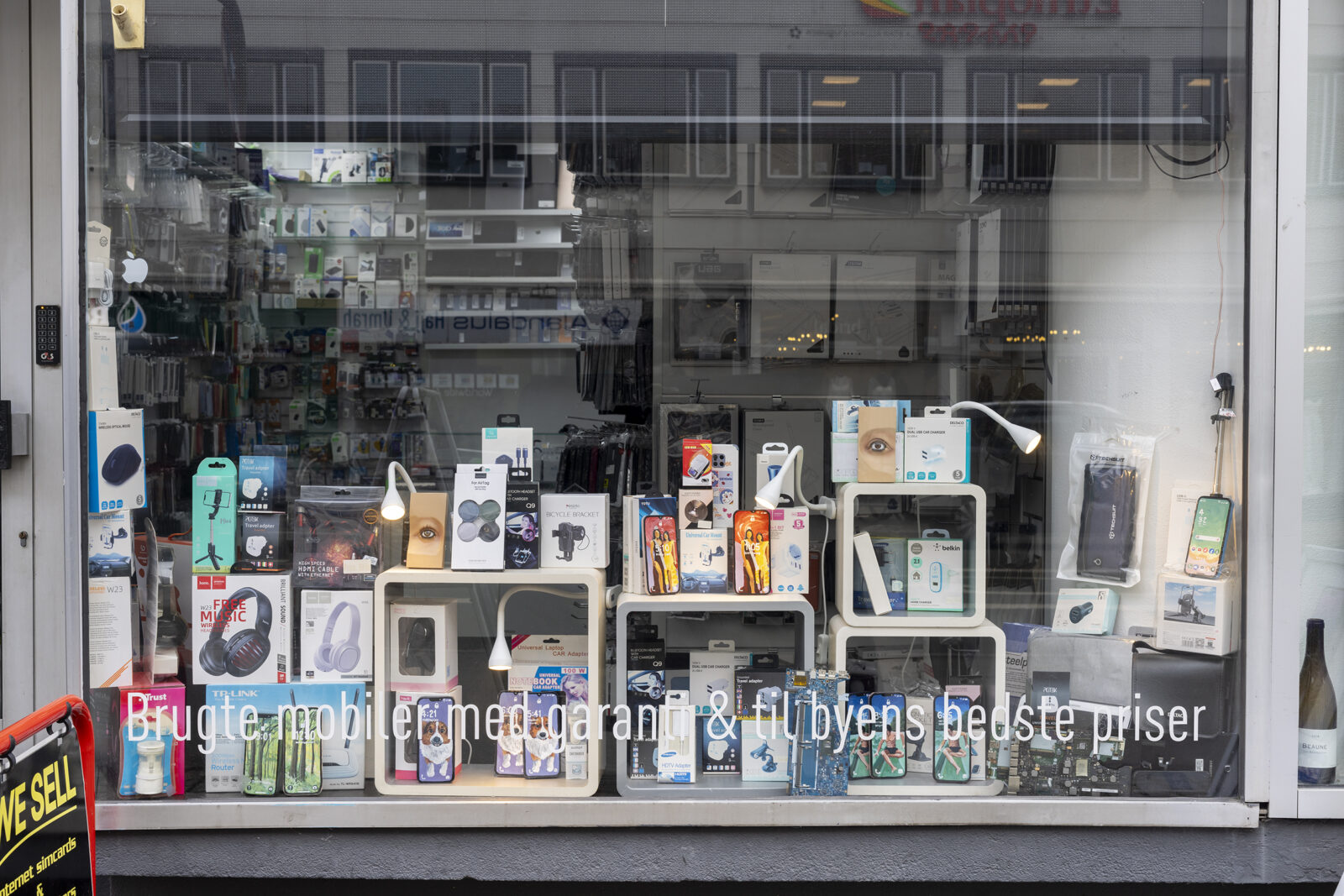
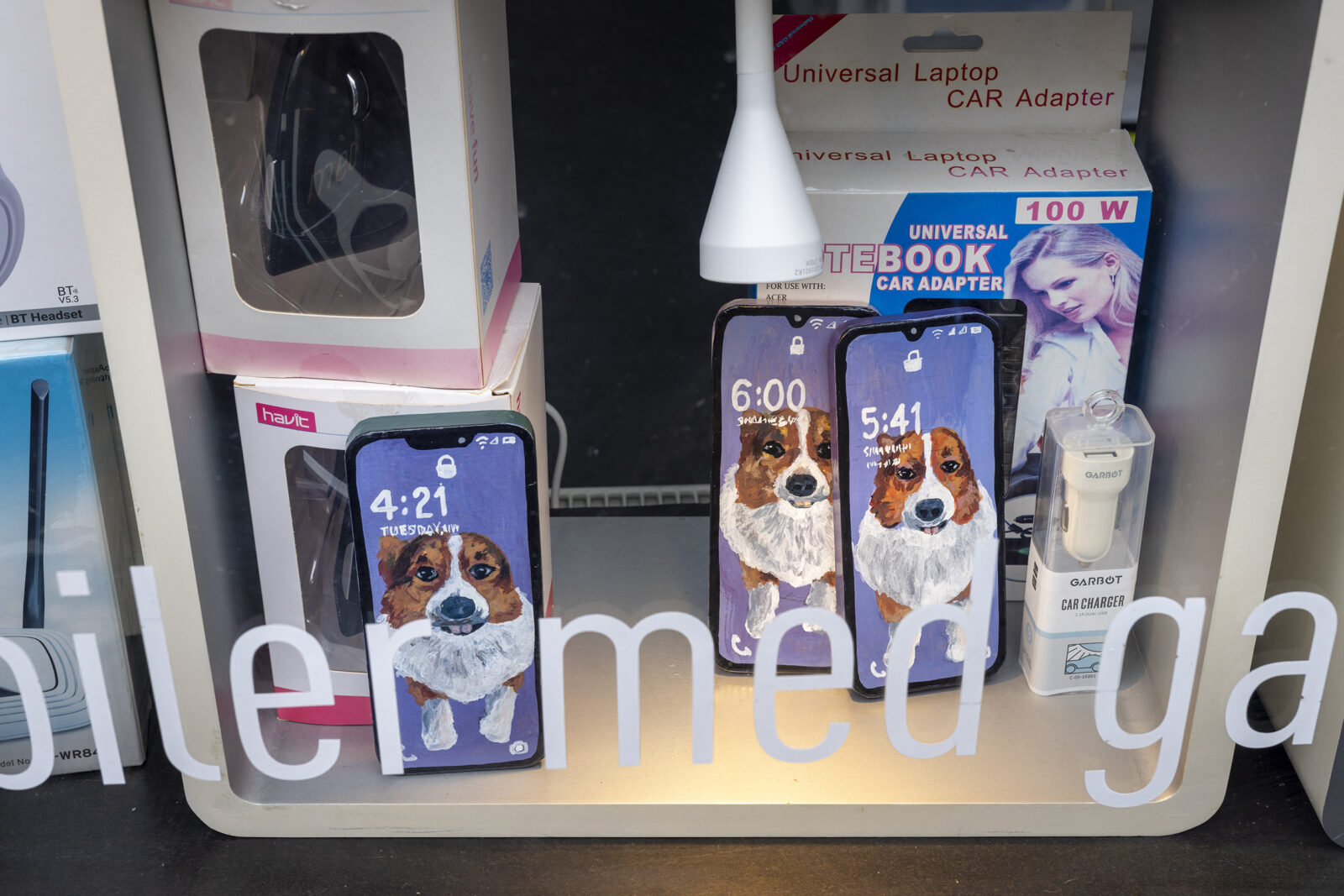
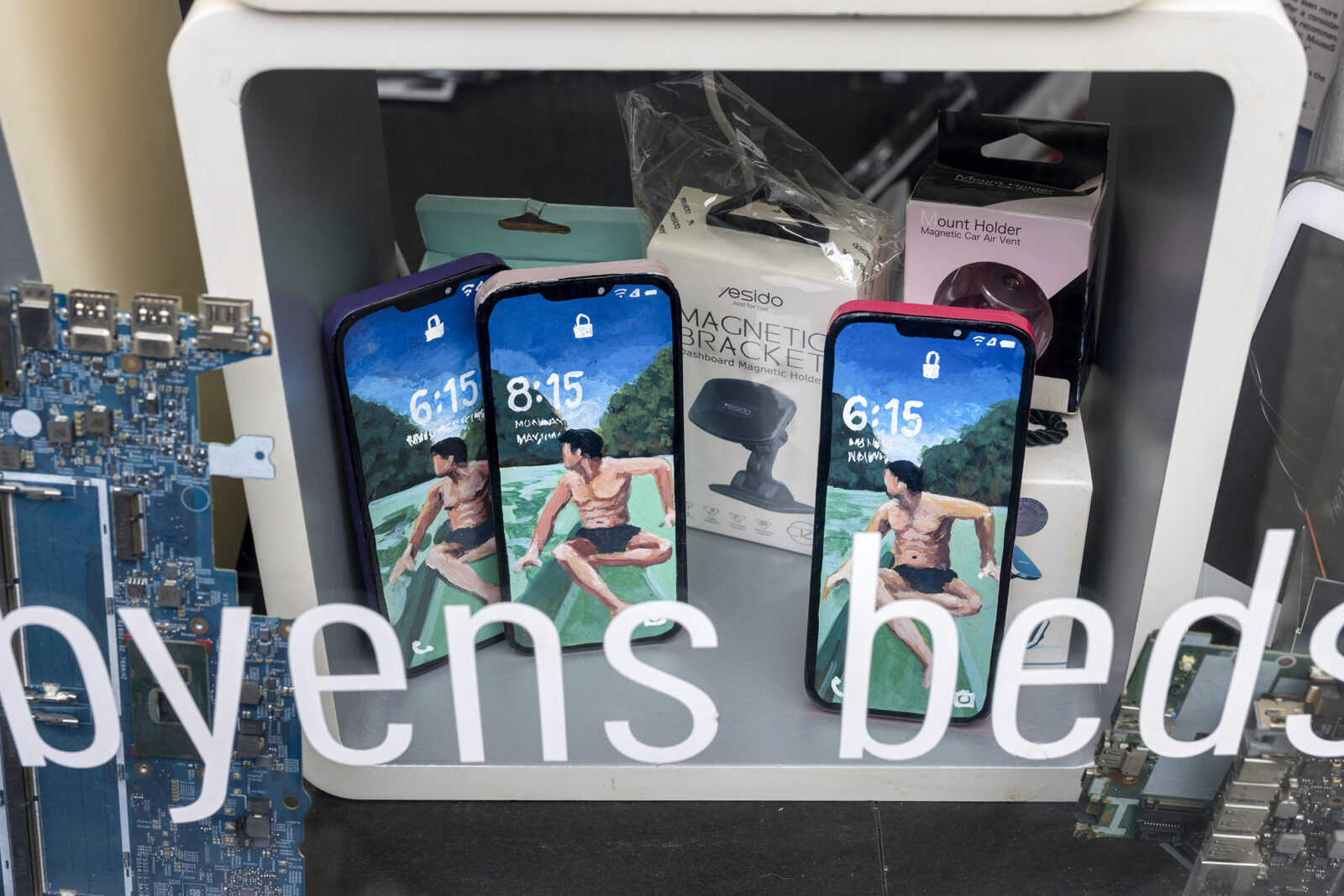
Allegedly, there are around 7.2 billion smartphones worldwide. Allegedly, there are around 8 billion humans worldwide. Not nearly 90 percent of the global population own a smartphone, but many percent own several. The more smartphones that exist, the more they seem like toys. The cheaper they become, the less likely they are to be repaired. Imagine the smartphone as a small box full of sentences, something that could look as fictive or prop-like as a painted cardboard square: indeed, smartphones became an image long ago. And imagine, then, the phone repair shop as a sanctuary of language, a tireless preserver of direct lines.
Most neighbors are people we never meet.
Most countries don’t share physical borders with that many other countries. Most people share their meals with people they’re relatively close to, physically as well as psychologically. Obviously, there are exceptions: Balikbayan boxes are units of goods sent by Filipinos living abroad to loved ones in the Philippines and food is a crucial component of such boxes. The amount of affection embedded in the decision to buy some food and send it across multiple borders to almost share meals with someone who is not at all in a country next to yours.
Neighborhood is a condition.
As the globe becomes smaller and denser and wireless, the latitude of neighboring necessarily expands. Indulging in something or someone physically out of reach has never been easier. Porn and takeaway and video calls exist and equal pay does not. I can think of gestures more loving than sharing your finances with people you care for—but not many, to be honest. Which is smaller: the distance between two bank accounts or the distance between two pair of eyes unfamiliar to each other exchanging a rapid gaze in the street? If you have a shop, and another shop close by offers money remitting, it’s easy to go there and send money earned in your shop to your faraway neighbor whose faraway shop will always earn much less than yours does.
They’re always in touch. One of the most intimate human transactions, touch, and yet it seems to be this condition that makes them unable to reach each other, unable to let go of each other.
By Nanna Friis
Jasmin Werner is currently a resident at Art Hub Copenhagen. neighbors is kindly supported by AHC.