
mogens and other stories
magnus andersen
2 june–8 july 2022

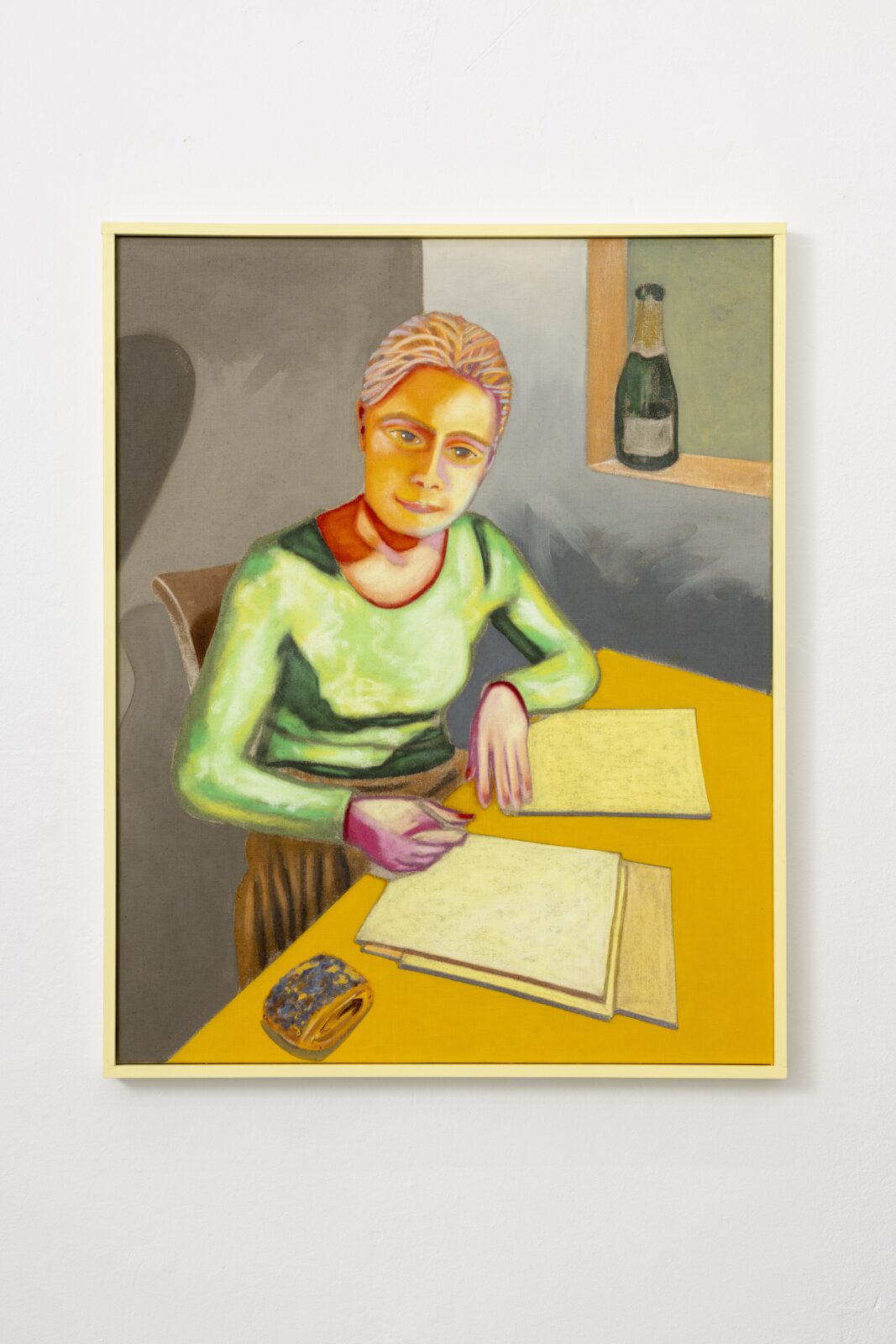
Mogens and Other Stories
Magnus Andersen
1)
It was the summer of 2019. We were very much in love. I told him my story. How I used to work for Ursula, how my interest in painting had sprung from a very specific preoccupation with the controversy of Venetian colour and Florentine design, to how I had a recently adapted and stronger interest in the contemporary field.
I sure did fancy him. He fancied me too. I could tell by the way he smiled, when telling him some story about a gallerist being killed in Italy. He picked me up a few days later at the library. We chatted a bit, and felt the winds down by the canal. He told me that he had lost his credit card, and when a tax person called him, he had to leave. We talked a bit about money. He was kind of a spender, in my opinion. I asked him to come join me in the countryside at Ursula’s, where I spent a lot of time back then. I borrowed a shiny blue car to impress him, and drove him down there.
The very first morning, I woke up and found the two of them in Ursula’s studio. They had hung their canvases next to each other and sat around the table sharing a cigarette. We all liked to talk about figuration, inspiration, literature, good manners, Sekt and sometimes Immendorf. We had Germany as a common reference. Ursula was a native, Magnus wentto school there, and so did I. In her late career, Ursula had lost her interest in detailed portraits. She read a lot of books, painted contours, silhouettes, threw paint and eggs at the canvas. Left it there to dry, before writing various hardcore statements upon them.
Magnus on the other hand, could spend days on a face. He would send me all sorts of snaps, documenting the process, when eventually he got back to Berlin, being miles apart…None of them, neither Ursula nor Magnus, enjoyed painting very much. At least that is what they told me, when I outspokenly envied their abilities and skills. “Only amateurs do”, they said.
Never did they comment much on each other’s works. Only Ursula once said, “You’re gonna do good with your bad paintings, I’m sure”.
I drove him down along the shore where J.P. Jacobsen had envisioned Marie Grubbe’s last ferry place. We read Mogens and Other Stories out loud, found the locations where the historic figures had actually lived, and made a pit stop at Marie Grubbes Vej. Magnus liked fantasizing about the 16th and the 17th century – and I – I began wearing dusty, peasant-looking clothes. We read J.P. Jacobsen’s novels all over again and fell into a parallel universe. Even Ursula kept calling Magnus, ‘Mogens’ … I began thinking about us as writers, and I began looking at Magnus’ paintings differently.
2)
Artists do not, of course, invent mediums. Carving, painting, drawing were all in full flower before there was any socially distinguishable group to call itself artists. But mediums then individualize their practice; they intensify the skills associated with them; and, importantly, they acquire histories.
Rosalind Krauss
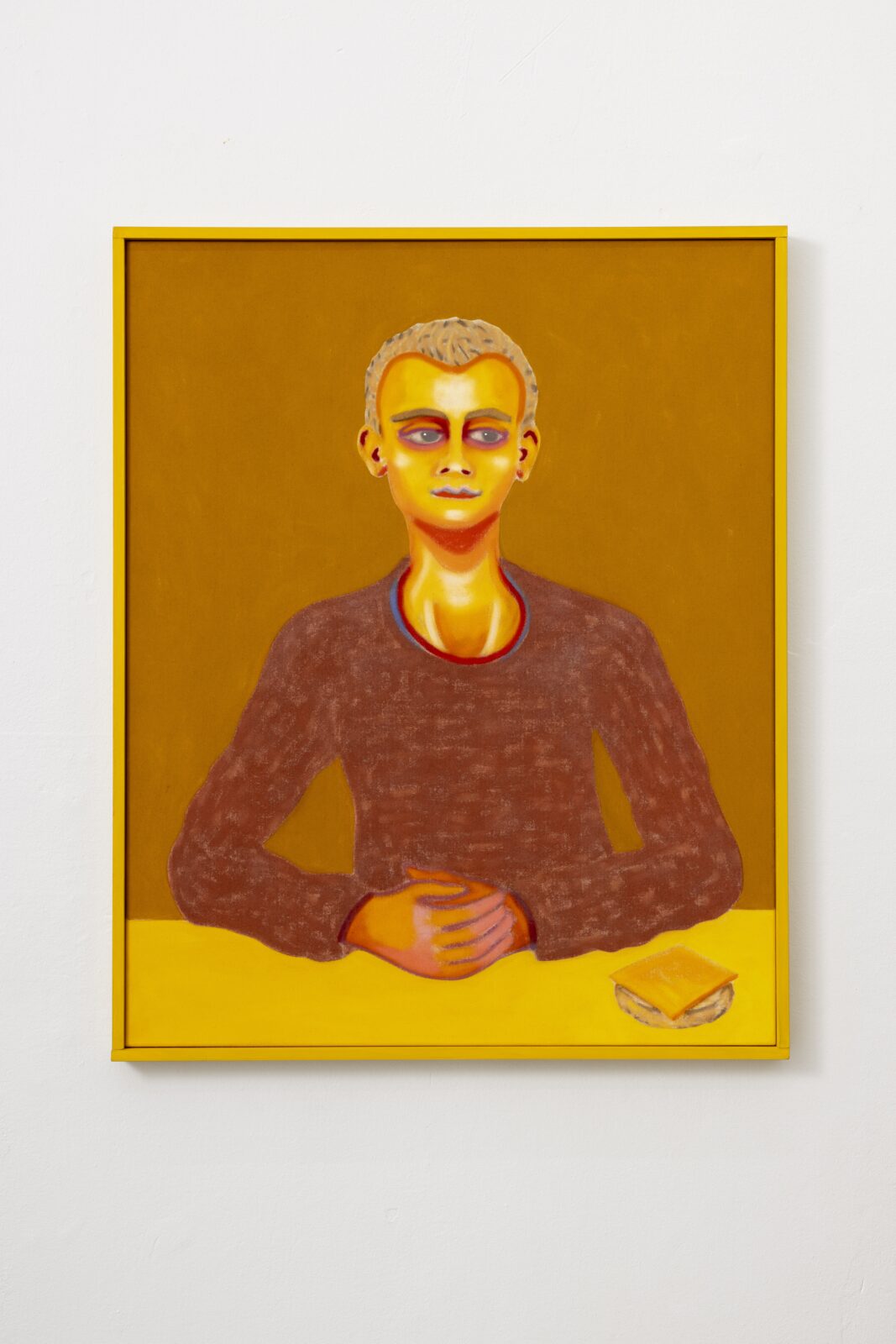
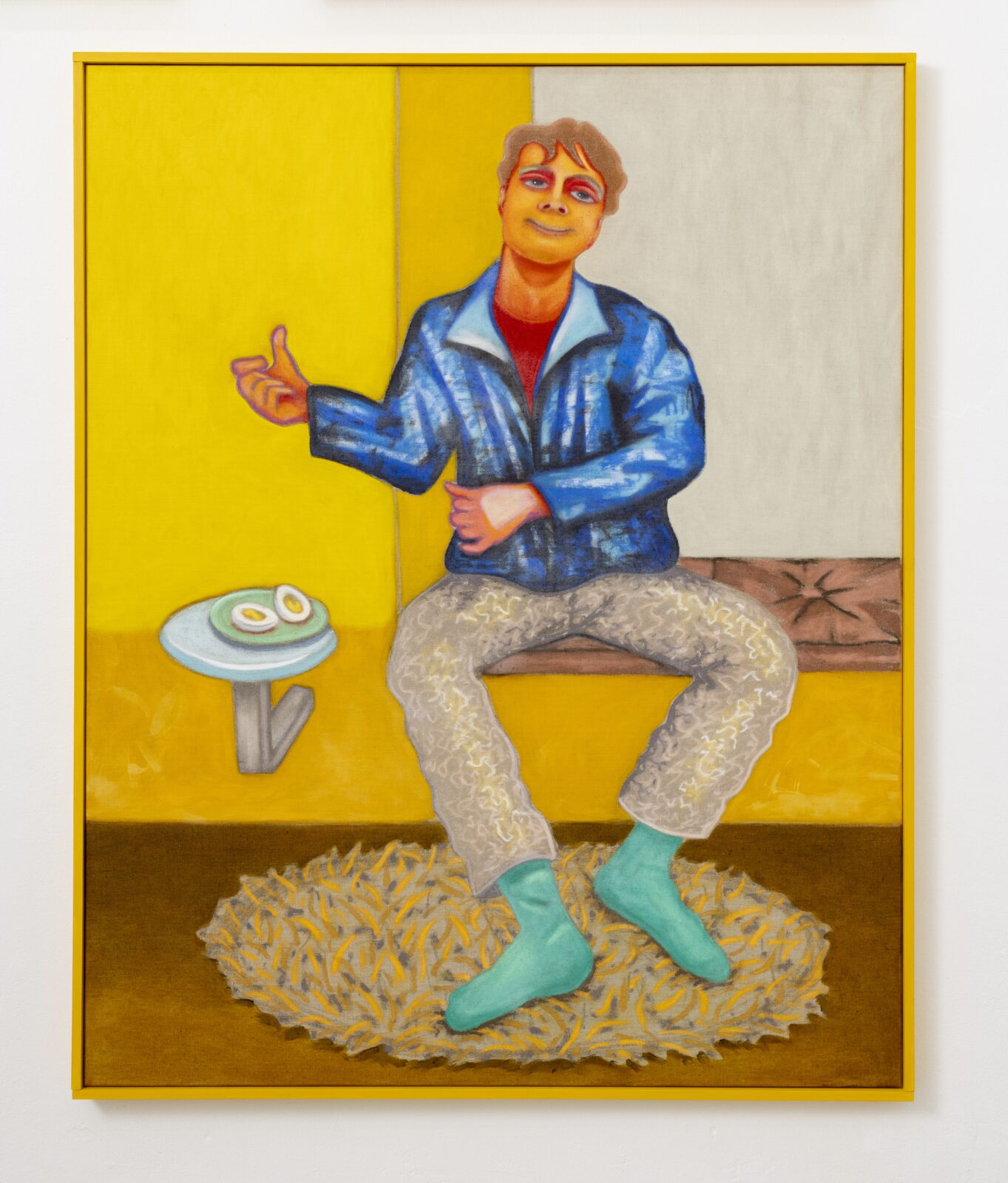
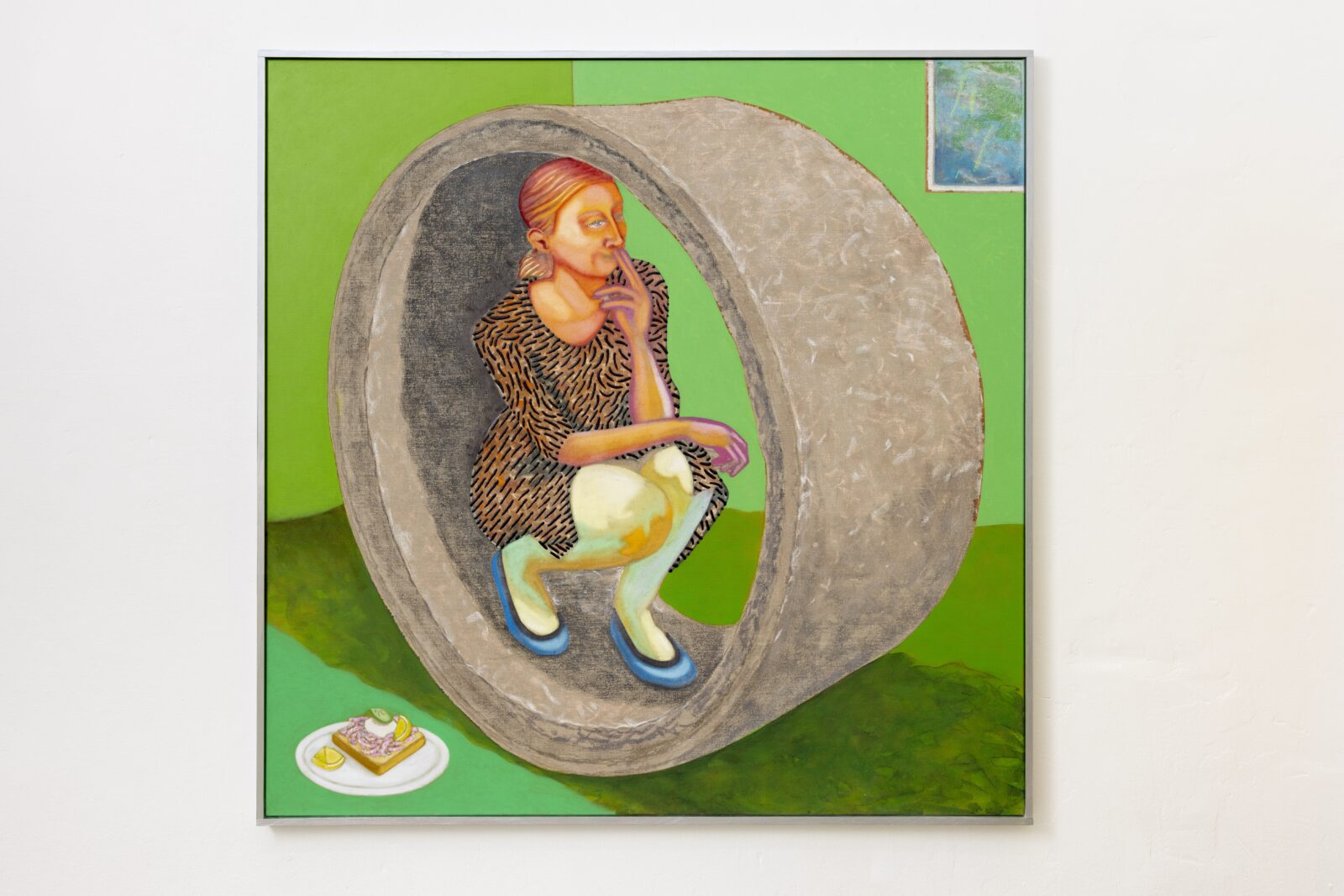
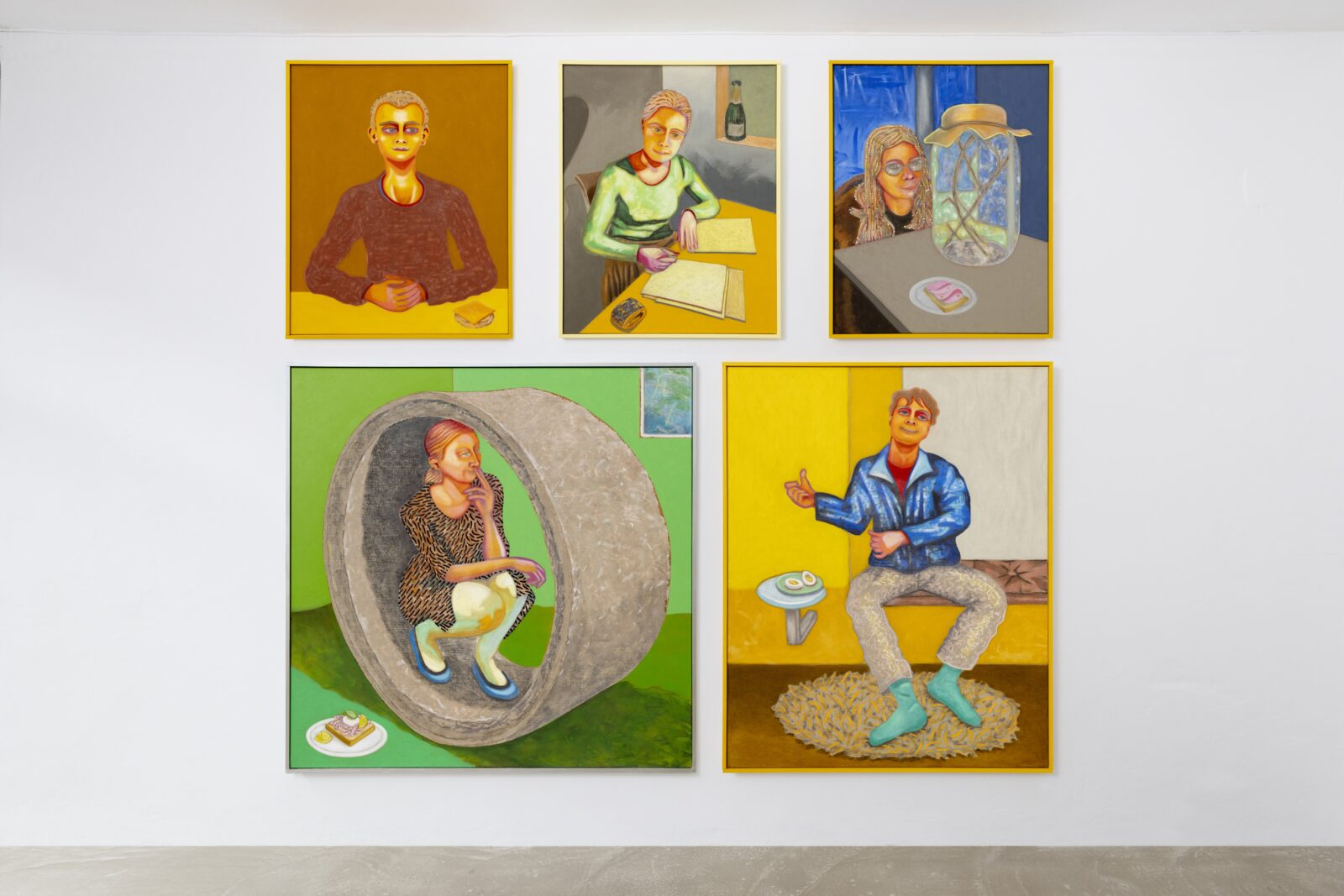
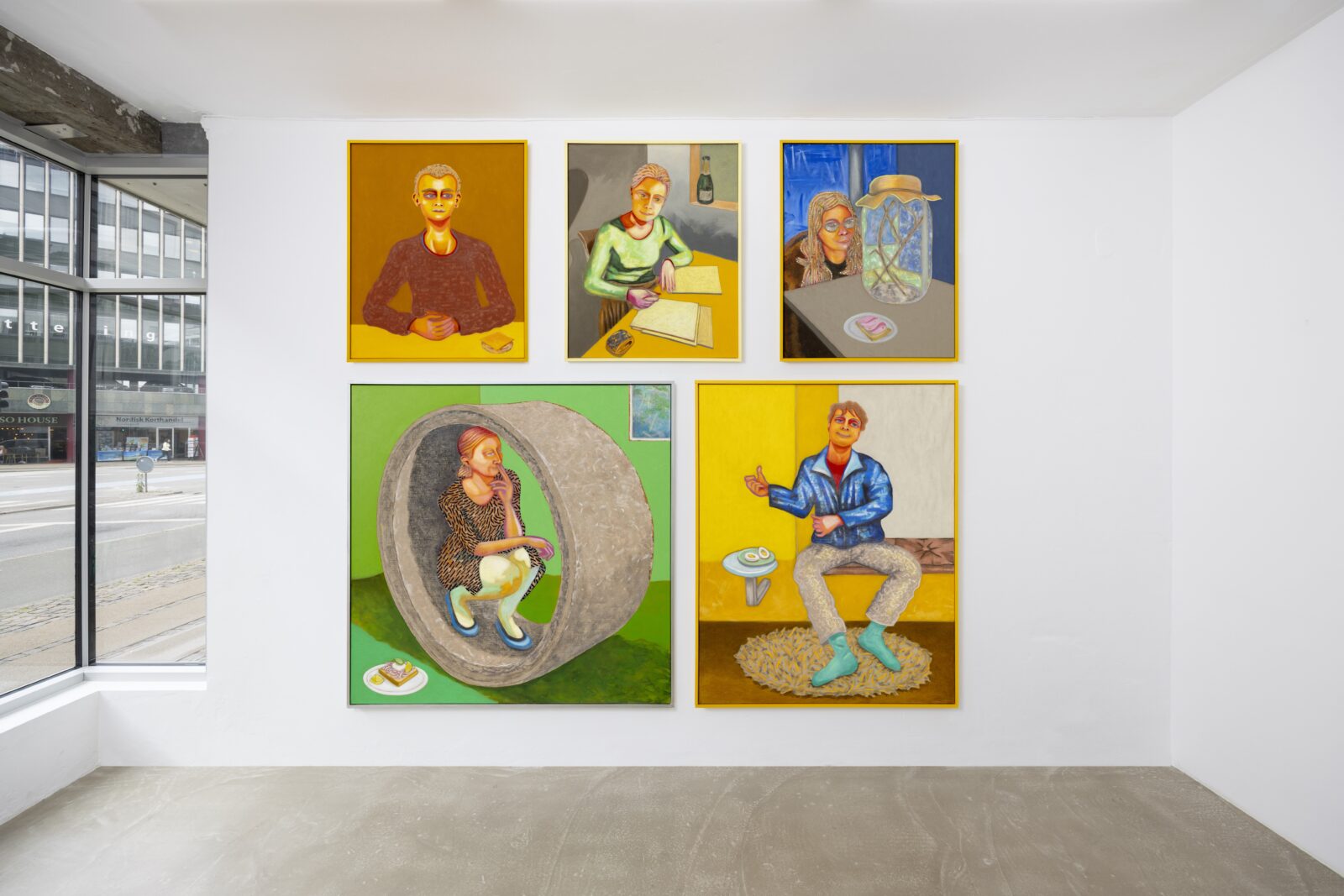
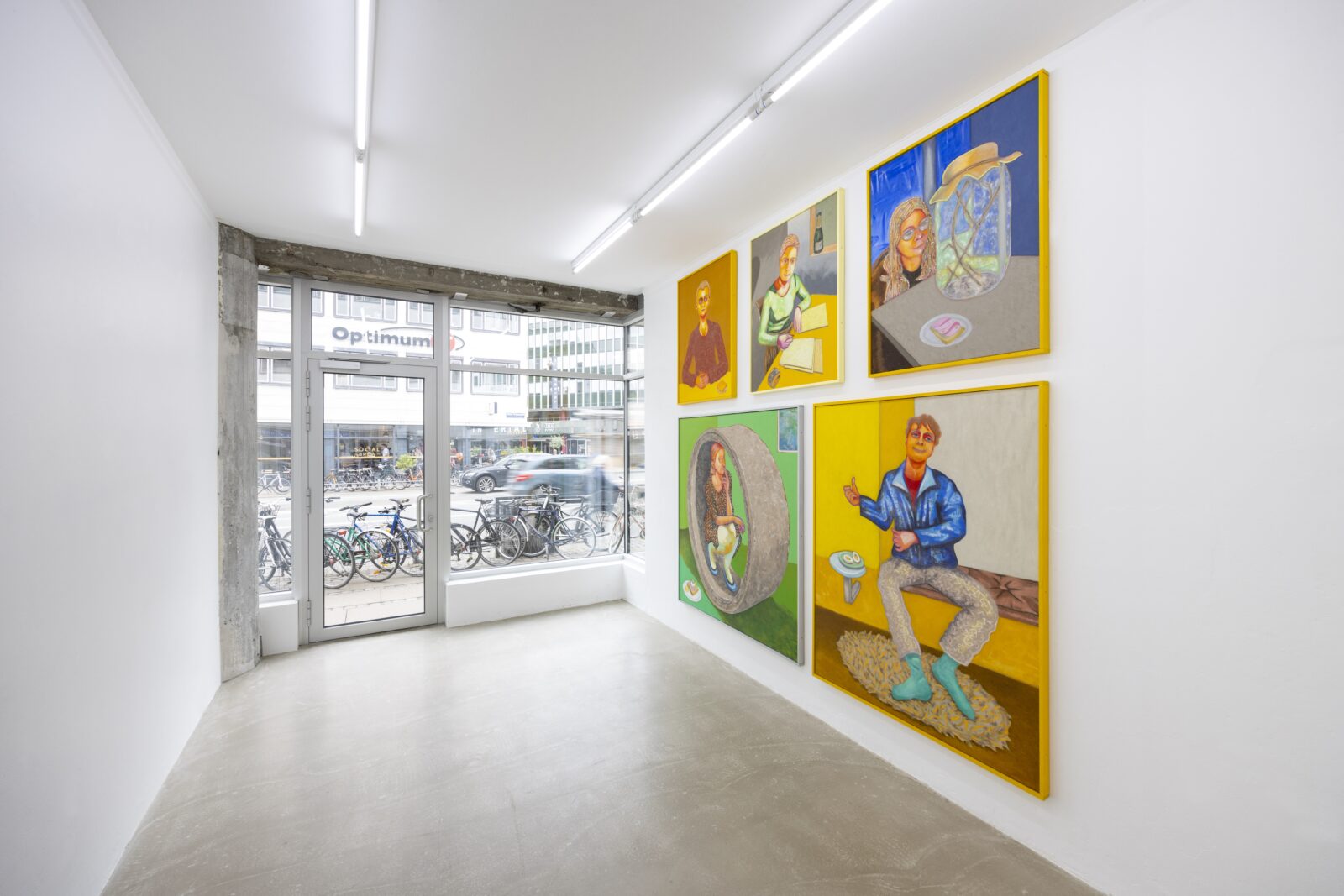
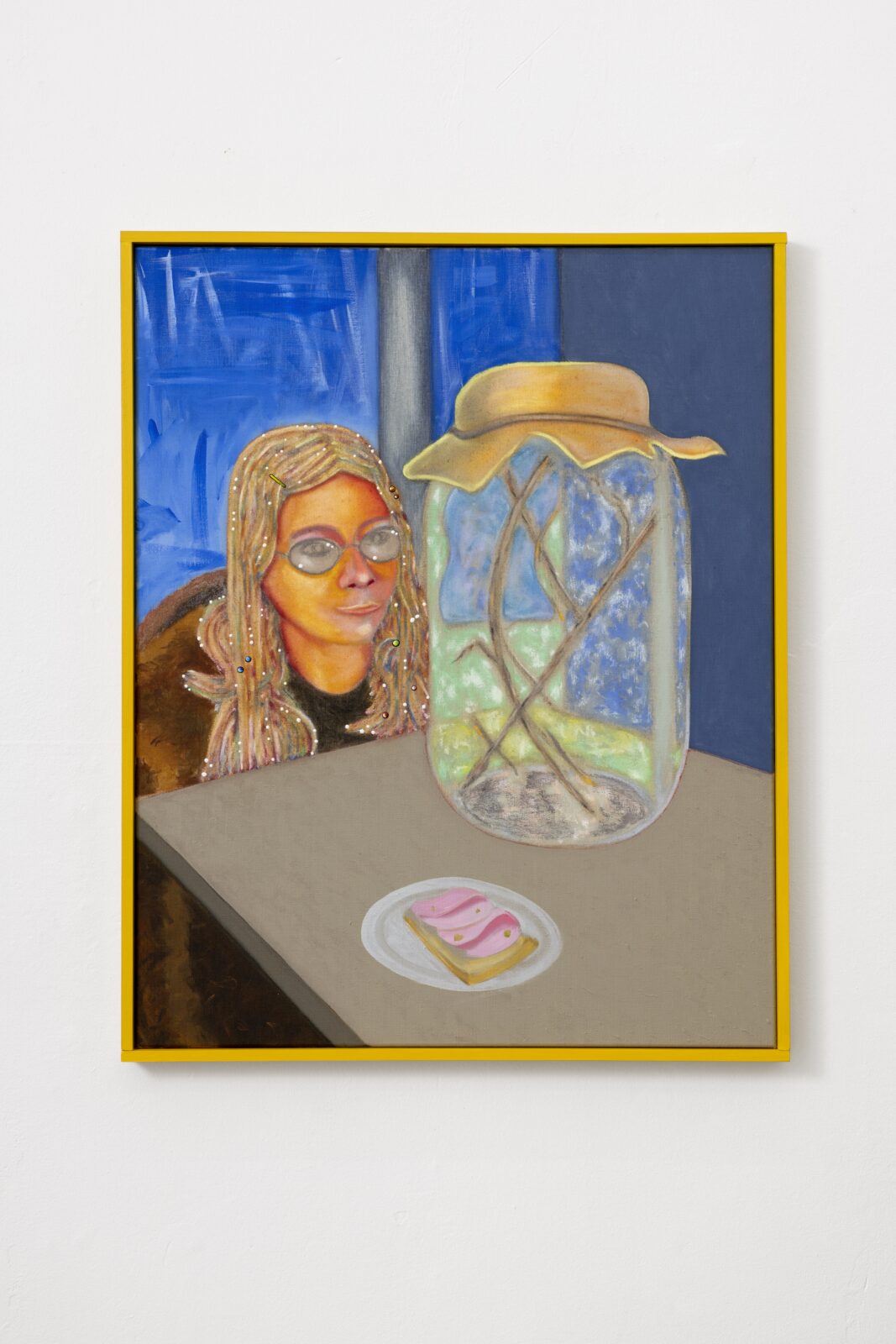
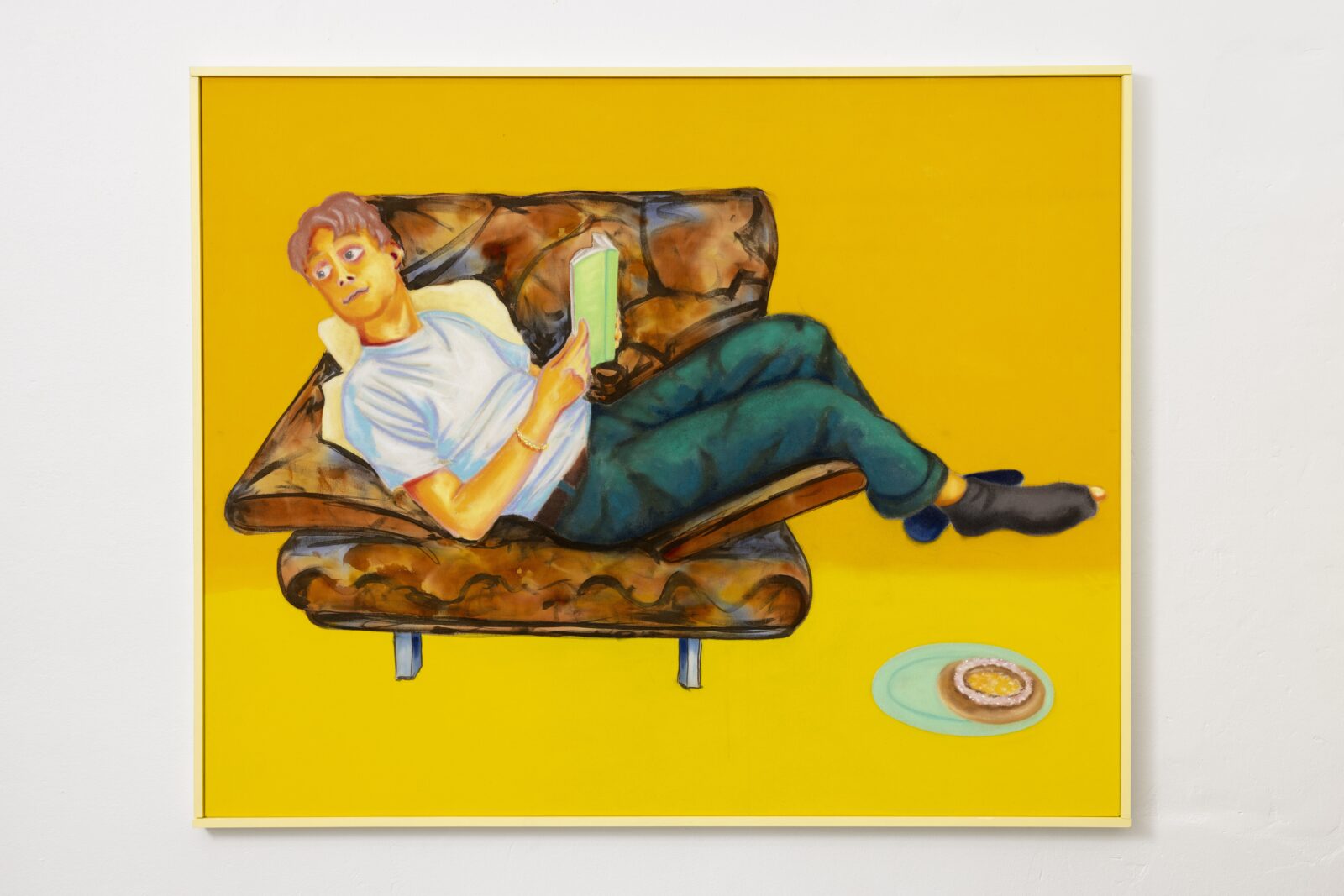
In the new series of paintings Mogens and Other Stories there is no real meaningful interaction between the figures depicted. No real story-line. Poses are oddly staged, only one man lying on a couch seems to devote his attention to something going on outside the frame. In comparison with earlier works, it seems like Andersen has put landscapes, perspectives and a broader interest in creating wider prospects to a side, focusing more on details occupying the attentions and needs of the depicted figures. A dish, a piece of writing, a highlighted dress, as well as more abstract matters like an invisible cigarette, an absent guitar or a comforting daydream.
Zooming in, looking at one single painting, or viewing the series as a whole, Andersen’s work catches a specific playfulness. What is at stake is this – an almost teasing enquiry with the viewer, as if the painter behind the painting is asking: do you understand the connections of this odd compositional work?
There is a difference between looking at one single painting, and then looking at a series. Even so, I found it useful reading Linda Nochlin’s notes on Courbet’s The Artist’s Studio when approaching and trying to grasp the content and compositional messages in Mogens and Other Stories. Though Nochlin talks about only one painting, and we are here trying to unfold a selection of works, her descriptive parts are still adaptable to what we are currently looking at. In 1999, when interpreting Courbet’s famous painting, Nochlin wrote as follows:
“…it offers the viewer no meaningful interaction among the figures, no story- producing give-and- take of gesture or attention. Poses are, with rare exceptions, apparently unmotivated: each figure seems frozen in the way children “freeze” intoodd or haphazard postures in the game of “Statues”; no figure is made to seem aware of or to pay attention to any other. This strange, frozen quality of the composition of The Painter’s Studio tells us that the key to its significance lies somewhere outside the perimeter of the painting itself, that there is information controlling the system of meaning to which we, the viewers, are not immediately privy.”
Just like in Courbet’s historic painting, Andersen’s work only gives confusing hints about its general intention. And it leaves the viewer puzzled. What is at hand? A story? A theatre play on pause? Staged compositions? Or portraits retrieved from everyday life? Am I witnessing complete casualness, or do I sense a note of intrinsic criticism, not easily put into words? What is there in front of me? For sure, no compositional hierarchy between the stuff depicted. Which discourses inform his work? A painterly and compositional one?
Besides the thickly painted gestures and highlights, so typical for Andersen’s work, squeezed directly from the tube onto the canvas, his paintings, due to his painterly tactics of working without a centre, makes most of his paintings come across with a Manet-like sense of spatial flatness.
The consequence of this stylistic choice – of course – is that the painting points as much towards the nature of painting itself as towards the figures depicted. These references are not just out of this century. They seem again relevant considering the world we live in, where navigation seems more problematic than just decades ago. The painterly style works in its own political narrative – the very primary thing in Andersen’s painting – leavingthe immediate motives secondary as jolly coincidence.
As a viewer, I enjoyed the series, and as an art historian I would like to dig deeper into this figurative flatness and its meanings. Sometimes opacity becomes more relevant to explore than transparency. So, as Krauss puts it in the introductory quote; “the arts are wrapped up in their media.” For J.P. Jacobsen, the short story Mogens and Other Stories was less about Mogens, and more about developing a sensitive and full language through which to express the story. Likewise is the negotiation between space, paint and story-line the actual point of Andersen’s work.
Text by Mai Dengsøe
education
2013–2016 Städelschule, (Prof. Judith Hopf), Frankfurt am Main, DE
2010–2016 Royal Danish Academy of Fine Arts, Copenhagen, DK
upcoming
2026 Frieze London, London, UK (duo)
solo exhibitions
2026 Hvis en Gädde dukker up, er det ikke altid bedst at være Først, Issues, Stockholm, SE
2025 Damdramaer, Rønnebæksholm, Næstved, DK
2024 L’Atlantique, profil_paris, Paris, FR
2024 Whisk d’or, palace enterprise, Copenhagen, DK
2024 LISTE art fair, Basel, CH
2023 Frischkäse, Neue Alte Brücke, Frankfurt, DE
2022 Copenhagen, page (NYC), New York, US
2022 Mogens and Other Stories, palace enterprise, Copenhagen, DK
2022 Readers Remedy, Damien & The Love Guru, Brussels, BE
2022 Royaume Des Clowns, Le Bicolore, Maison du Danemark, Paris, FR
2021 Vocals and Lyrics, Huset For Kunst og Design, Holstebro, DK
2021 Agrication, Tranen, Gentofte, DK
2020 NIGHT CALL, Bizarro, Copenhagen, DK
2020 Stockholm Syndrome, Neue Alte Brücke, Frankfurt, DE
2019 Orchard of Sensibilities, Éclair, Berlin, DE
2018 Danzanti Militanti, Gio Marconi Gallery, Milan, IT
2017 L’éducation régionale, Nassauischer Kunstverein Wiesbaden, Wiesbaden, DE
2016 Seedless_Grapes <3, Shoot The Lobster, New York, US
2015 Agrimundo, Bianca D’Alessandro, Copenhagen, DK
2015 Spazzacamini, Neue Alte Brücke, Frankfurt, DE
2014 Magnus Andersen, VeSch, Vienna, AU
2012 Commerz Transsaharian, Peinture et Sculpture, Copenhagen, DK
group exhibitions
2026 Vingesuset, Fuglsang Museum, Toreby, DK
2026 Daddy Issues, Gammel Strand, Copenhagen, DK
2026 Market Art Fair, Stockholm, SE
2025 CHART Art Fair, Copenhagen, DK
2025 The Living, International Press, Athens, GR
2025 Syndens Blomster, Galleri Tom Christoffersen, Copenhagen, DK
2024 Koloristerne, Den Frie Centre for Contemporary Art, Copenhagen, DK
2024 CHART Art Fair, Copenhagen, DK
2024 Milky Ways, The Nivågaard Collection, Nivå, DK
2024 Two Weekends, YEAH, Brussels, BE
2023 ANOTHER SURREALISM, Museum Sønderjylland, DK
2023 CHART Art Fair, Copenhagen, DK
2023 Downtown Issues II, Issues, Stockholm, SE
2022 ANOTHER SURRELIASM, Den Frie Centre of Contemporary Art, Copenhagen, DK
2022 Royaume Des Clowns, Le Bicolore, Maison du Danemark, Paris, FR
2022 CHART Art Fair, Copenhagen, DK
2021 Page at Petzel, Petzel Gallery, New York, US
2021 Tokyo Arts & Crafts Objects Expo, XYZ collective, Tokyo, JPN
2021 Downtown Issues, Issues, Stockholm, SE
2021 Dansk Kunst Nu, Statens Museum for Kunst, Copenhagen, DK
2019 Metamorphosos. Art in Europe Now, Foundation Cartier, Paris, FR
2019 Enquête Arcane, DOC, Paris, FR
2019 Salon de Peinture Muhka, Antwerpen, BE
2019 Desire For Passion By Eros, Issues, Stockholm, SE
2019 Ford Every Stream, Museo Apprente, Naples, IT
2018 Painting: Now & Forever, Part III, Matthew Marks, New York, US
2018 Painting: Now & Forever, Part III, Greene Naftali, New York, US
2018 Helvedet opløser sig, Galleri Nicolai Wallner, Copenhagen, DK
2018 Weeping, Dreaming, Fucking, Laughing, Wschod, Warsaw, PL
2017 Mystification of the Everyday, Delmes and Sander, Cologne, DE
2016 The Squatter, Gaudel de Stampa, Paris, FR
2016 To Lie in the Cheese, to Smile in the Butter, Kunstsaele, Berlin, DE
2016 Croissant, Museum für Moderne Kunst, Frankfurt/Main, DE
2016 Afgang, Kunsthal Charlottenborg, Copenhagen, DK
2016 Hüttendasein, 15 Orient Ave., New York, US
2016 Cold Society No. 2, Galerie der Stadt Schwaz, AU
2015 Natural Instincts, Foundation Les Urbaines, Lausanne, CH
2015 Ajolly, Neue Alte Brücke, Frankfurt/Main, DE
2015 Ancient Carriers, Galerie Markus Lüttgen, Cologne, DE
2015 Times, Gallery Christian Andersen, Copenhagen, DK
2015 Six possibilities in painting, Galerie Bernhard, Zürich, CH
2014 Late European Decadence, Neue Alte Brücke, Frankfurt/Main, DE
2014 Im Frühling, Darling, Kunstverein Hamburg, Hamburg, DE
2013 Crema di Mente, Sala del Lazzaretto, Naples, IT
2013 Ligegyldigt hvorhen blot udenfor denne verden, Galleri Nicolai Wallner, DK
public collections
Collection European Central Bank, Frankfurt am Main, DE
Danish Arts Foundation, Copenhagen, DK
Fuglsang Art Museum, Toreby, DK
Lab’Bel, Suresnes, FR
Museum Sønderjylland, Tønder, DK
The New Carlsberg Foundation, Copenhagen, DK
SMK – National Gallery of Denmark, Copenhagen, DK
bio
Born Elsinore, Denmark 1987
Lives and works in Copenhagen
Magnus Andersen draws abundantly from a wide range of art historical and popular cultural references, spanning Flemish still lifes,17th-century baroque and classical music, to color field painting and advertising aesthetics. Andersen renegotiates mundane and easily recognizable signifiers of contemporary visual culture and deliberately exaggerates them to a point of uncanniness. Cultivating humor and seriousness equally, his work engages with an accelerated nostalgia emblematic of post-industrial consumerism.