
love your clean feet on thursday
young-jun tak
31 january–15 march 2025

Love Your Clean Feet on Thursday
Young-jun Tak
The Ritual: Sacred That is Profane, Profane That is Sacred
by Övül Ö. Durmuşoğlu
Atlantiades [Hermaphroditos] fought back, denying the Nymph her joy; she strained the more; her clinging body seemed fixed fast to his. ‘Fool, fight me as you will,’ she cried, ‘You will not escape! Ye Gods ordain no day shall ever dawn to part us twain!’ Her prayer found gods to hear; both bodies merged in one, both blended in one form and face. — Ovid’s Metamorphoses.
Sleeping Hermaphrodite (1st century CE), discovered in the Roman Diocletian baths in 1618 and now displayed in the Sully section of the Louvre, may be one of the most beautiful and sensual representations of the human body from ancient times. The puffy mattress was added by the sculptor Gian Lorenzo Bernini at the request of the sculpture’s owner, Cardinal Scipione Borghese, one of Rome’s wealthiest men and an astute art collector who commissioned works that would define the Baroque movement. Bernini’s adaptation became so famous in the 17th century that it was replicated in royal courts and aristocratic homes. Ovid’s Metamorphoses narrates the transformation of Atlantiades, the gorgeous son of Aphrodite and Hermes, born and raised on Mount Ida, into Hermaphroditos after Nymph Salmacis’ plea to unite with him in passion. Sleeping Hermaphrodite not only plays with the perfect balance of masculinity and femininity, rationality (Hermes) and beauty (Aphrodite) in a mythical body, but also subverts the codes of desire, envisioning a fusion beyond the traditional gender binary, fifteen centuries later.
Filmmaker and sculptor Young-jun Tak resists normalizing how the pagan blends into the sacred, or how the sacred becomes profane in everyday objects and rituals. He refuses to treat this interplay as an exception. Instead, he seeks to instrumentalize the breach playfully, particularly in his exploration of queer desire. Tak understands that representation is inextricable from embodiment, and that within all systems of representation, the iconic and symbolic coexist with indexical forms of knowledge(1). In this context, he would be curious about how the puffy mattress finds its way through the hands of Bernini, how it carries the beautiful hermaphrodite to Catholic households like a magic carpet, and how the defining rules of sexual division are lustfully and artistically renegotiated. Transgressive desire always finds its path in the Western moral world of categories, order, and division, often through such renegotiations in art.
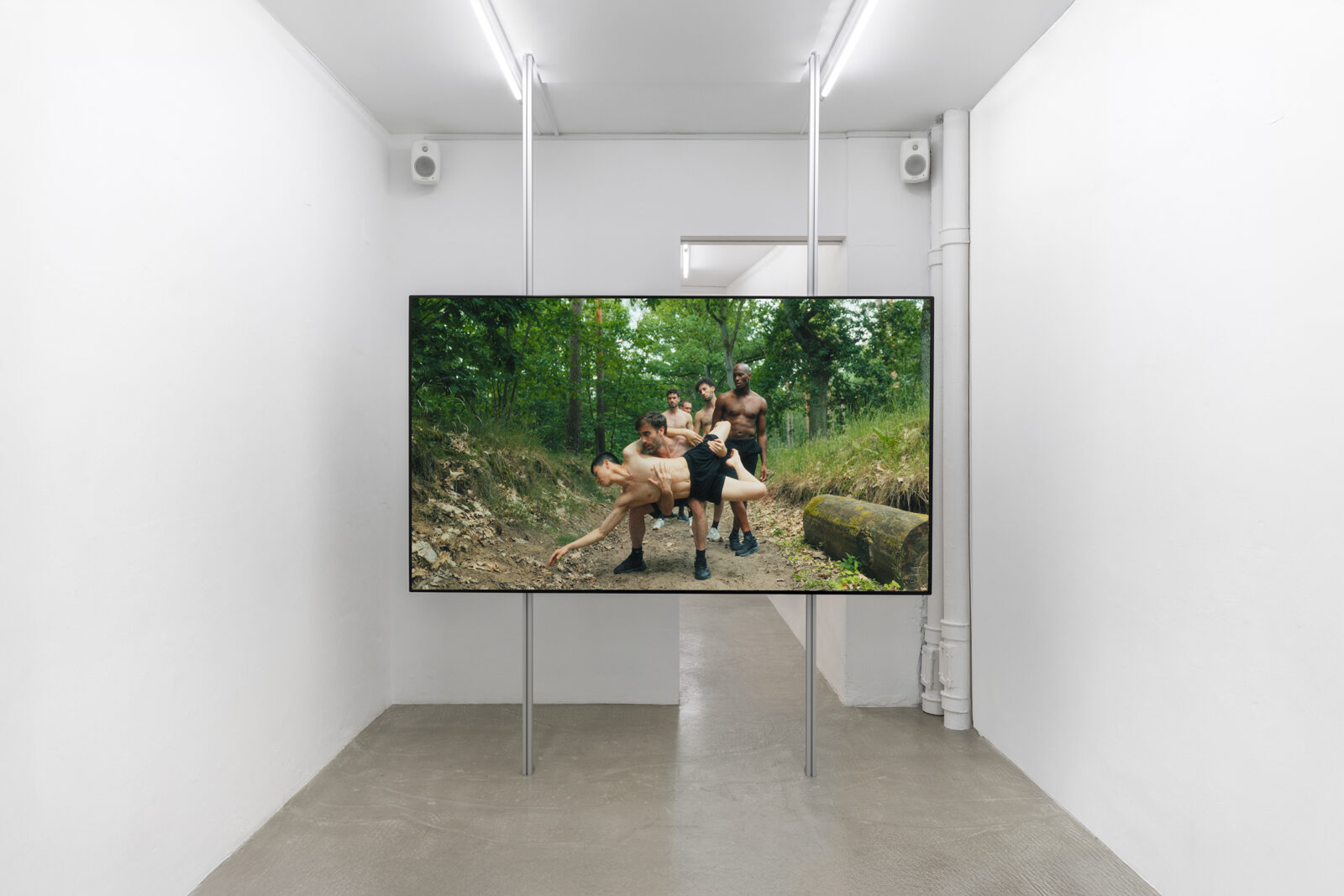
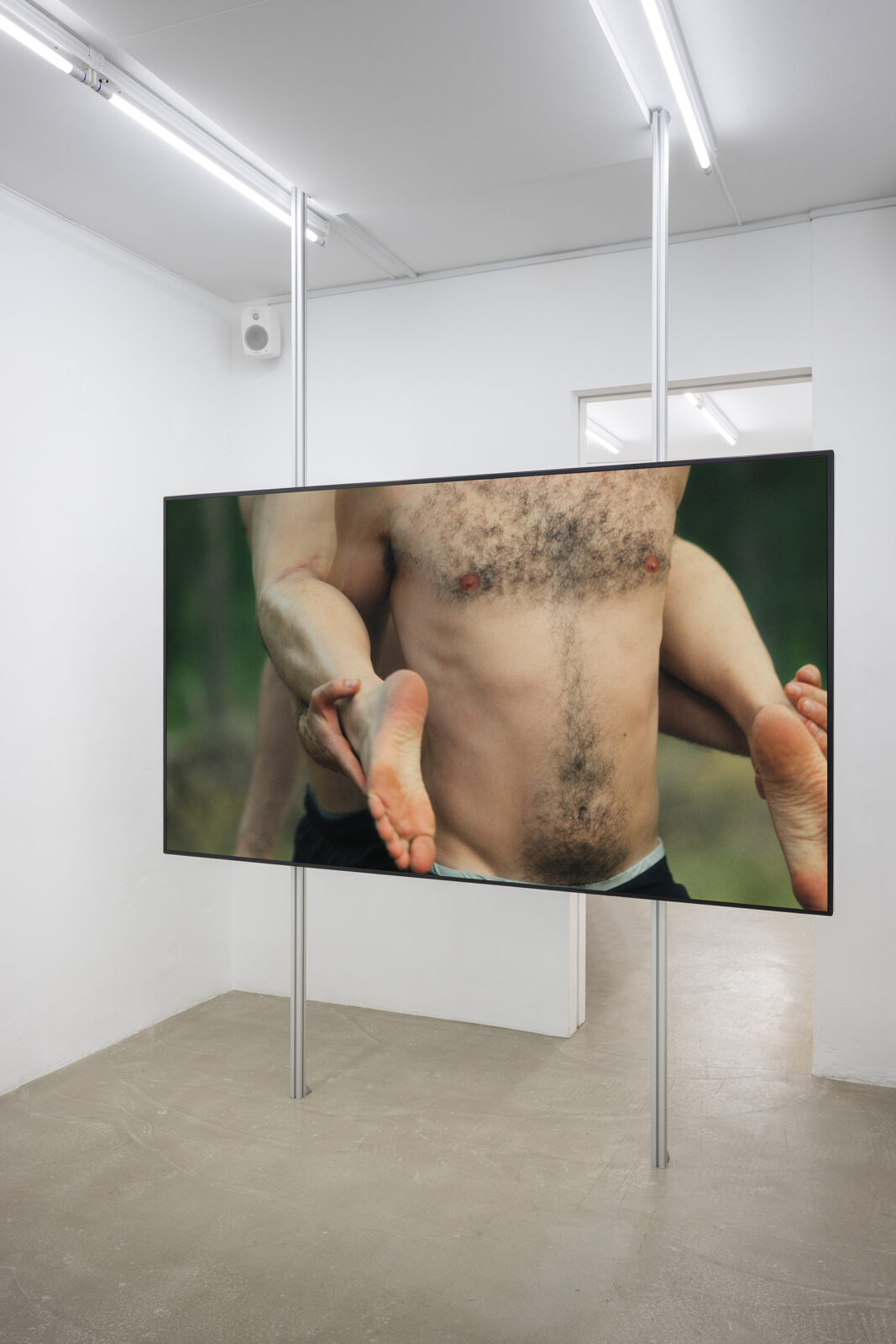
Tak’s second entry in his choreography film series, Love Your Clean Feet on Thursday (2023), continues to reflect on the heteronormative duality that seeks to impose order through the exclusion of queer, trans, non-binary, and other non-normative bodies—despite the complex embodiments of homoerotic desire that bypass this duality.
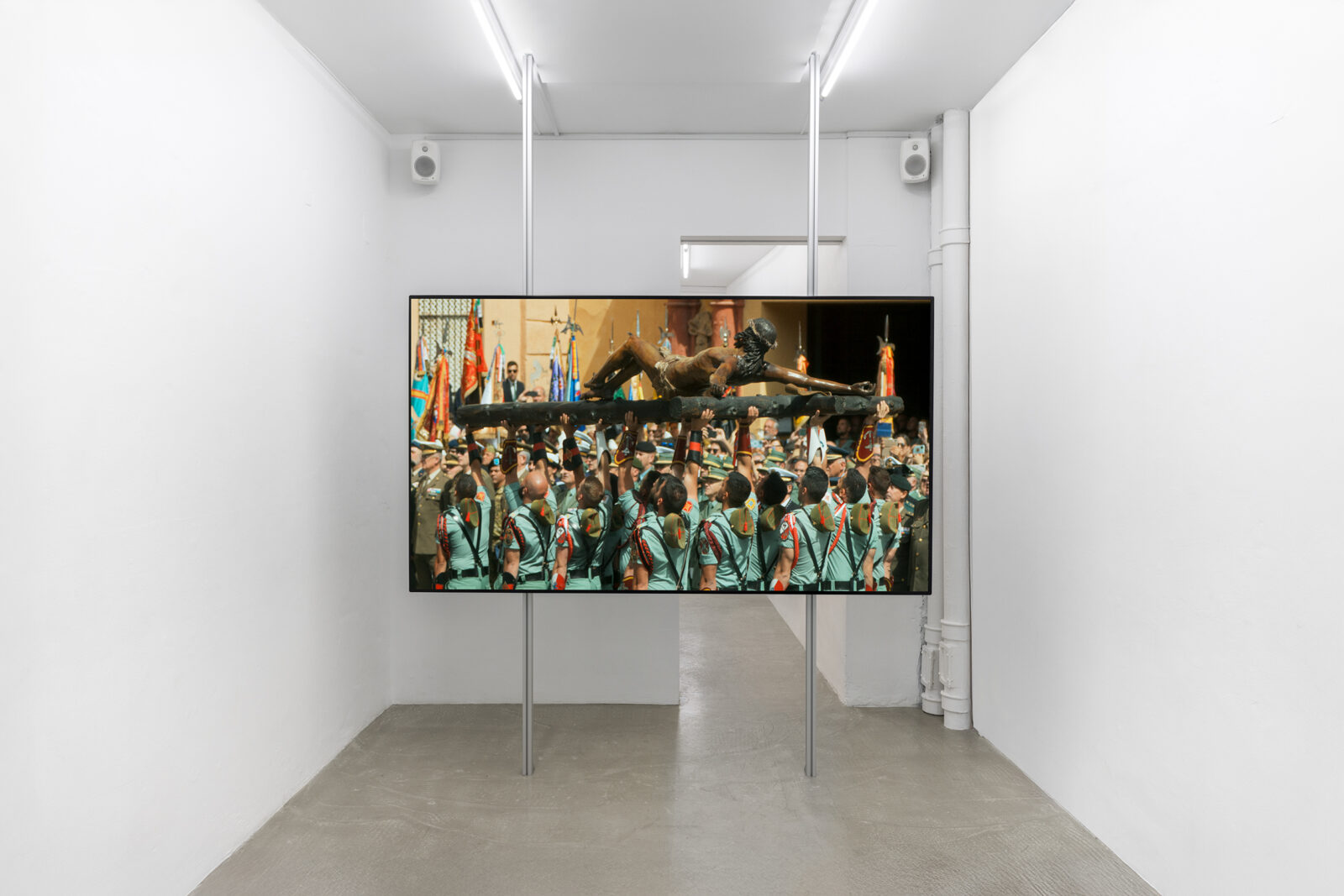
In this work, the choreography draws from two cultural artifacts—one popular, the other highbrow. The first is the annual Transfer of Christ performance by Spanish Legion soldiers in Andalusia during Holy Week; the second is Kenneth MacMillan’s groundbreaking ballet Manon, first staged in 1974 at London’s Royal Ballet. Led by Jamal Callender, a troupe of male dancers advances through Grunewald Forest, a historic gay cruising spot in Berlin, evoking Christopher Isherwood’s recollection in his 1976 memoir Christopher and His Kind: “Berlin meant boys.” The choreography is inspired by a scene in Manon where the eponymous female protagonist is lifted and carried above the heads of men as an object of desire. Manon, a colloquial version of Marie, is based on Abbé Prévost’s 1731 novel L’Histoire du Chevalier des Grieux et de Manon Lescaut, which was later adapted into operas by Massenet and Puccini and various films. Manon is depicted as a complicated character, and the story follows the woman who, on her way to a convent, falls in love with Des Grieux but ultimately chooses to become a courtesan of Monsieur G.M. to escape poverty. Manon—portrayed as an amoral figure and conceived as a female stereotype meant to promote moral behavior by Catholic clerics—was an unconventional and provocative figure for ballet, surprising audiences and critics at the time. MacMillan’s circular, up-close choreography, inspired by ice skating, subverts the story’s moralistic framework.
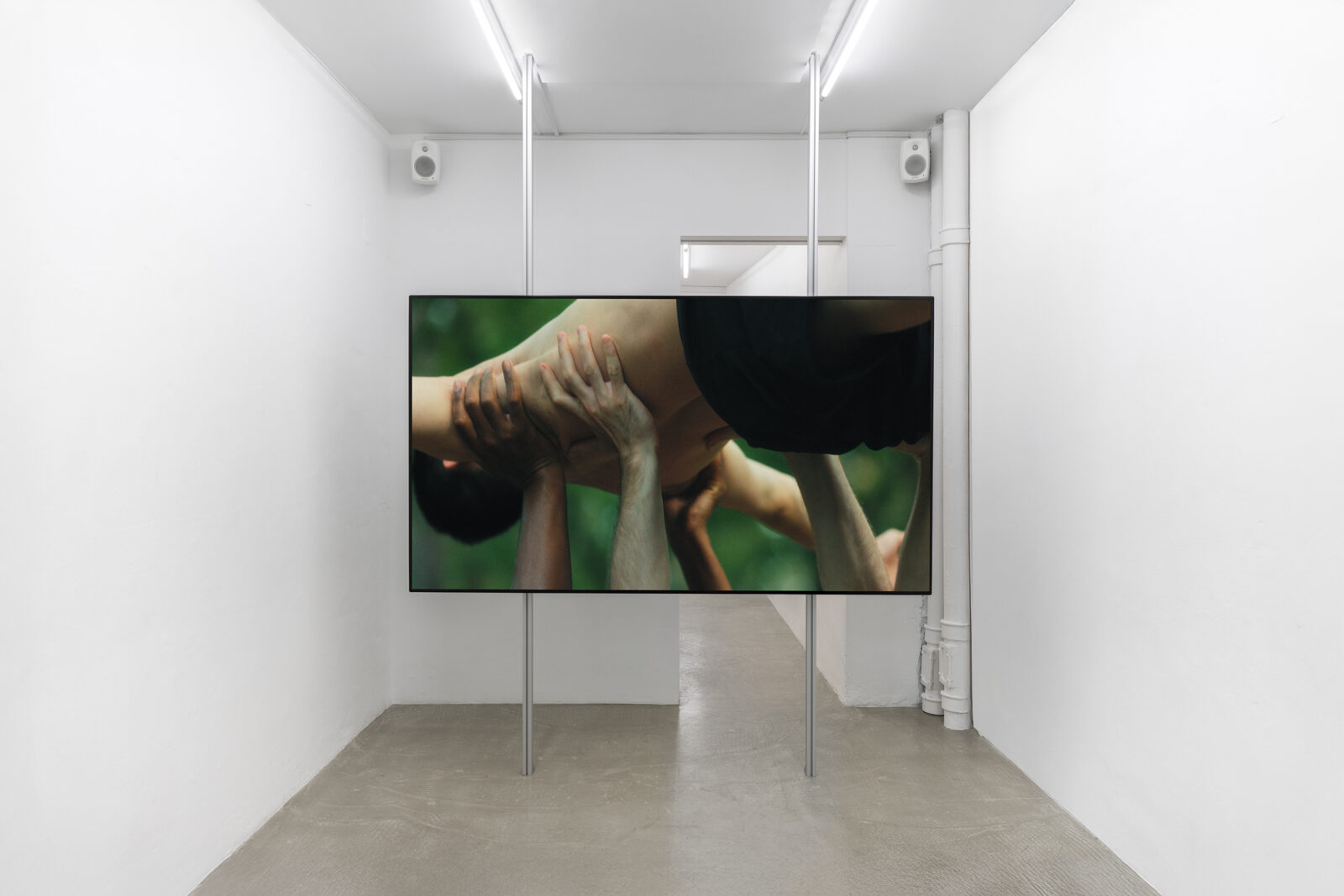
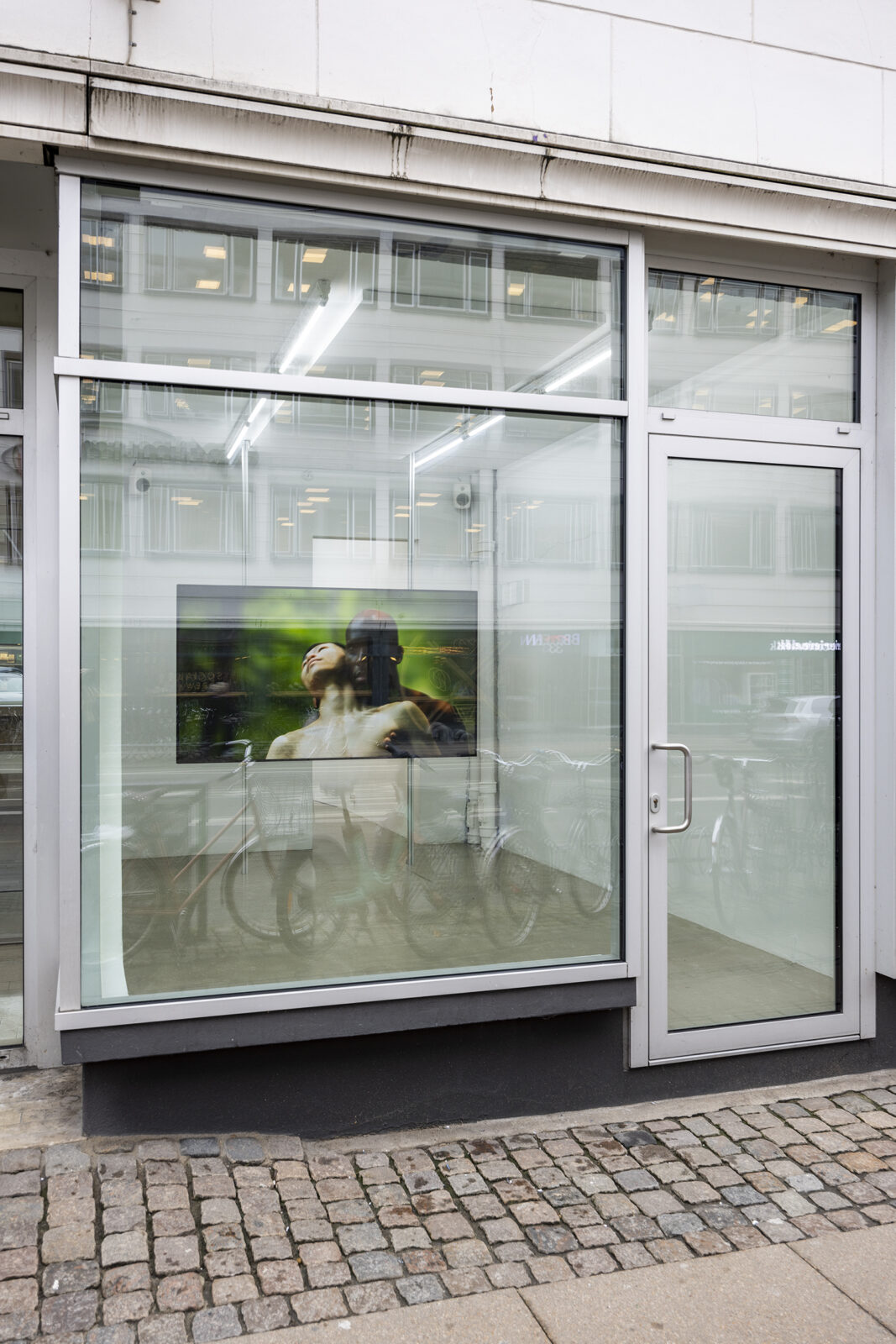
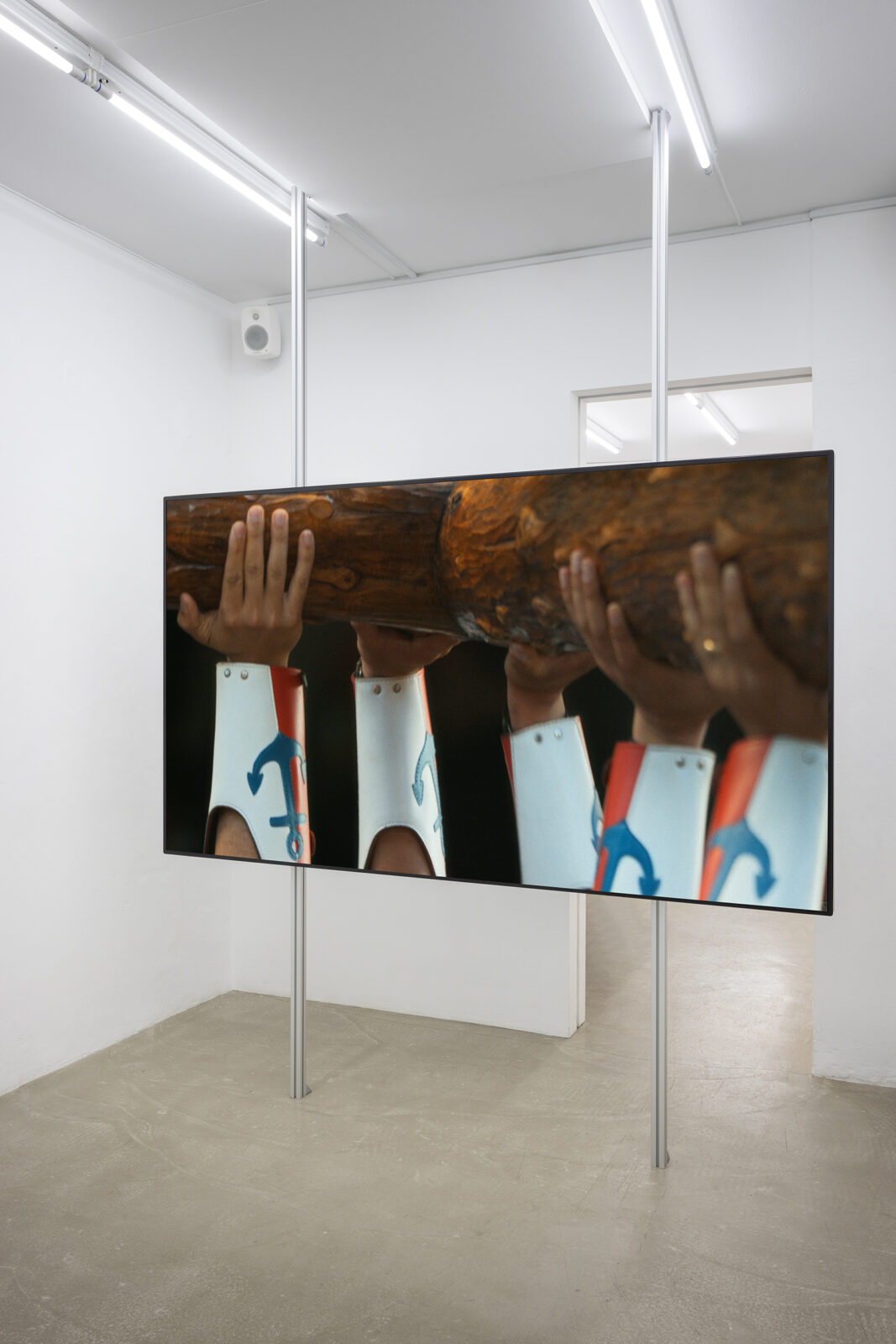
Love Your Clean Feet on Thursday alternates between intimate body shots of muscular, confident Spanish Legion soldiers in their uniforms, carrying a wooden crucified statue of Jesus in Andalusia, and the cool, queer male dancers of Callender’s troupe in Grunewald. The dancers carry Yi-Chi Lee in a connected sequence of movements, ensuring his body remains long and linear, with his feet never touching the ground. In some scenes, he resembles a porcelain doll; in others, he seems animated by invisible puppet strings. The troupe wears minimal, sexy Berlin club attire—black shorts and t-shirts. Both Jesus as an icon and Lee as a symbolic Manon serve as pivotal yet passive agents shaping the movements of the dancers. The touch of worship and the touch of desire merge into each other. The feet in military boots and sneakers converse in pace, negotiating a fluid masculinity, with embodied desire finding space in fluidity. Tak uses his camera as a haptic tool of desire, caressing and exploring. Meanwhile, one of the dancers narrates and reflects on the importance and necessity of touch.
The Spanish Legion is a corps of professional troops structured to fight in Spain’s colonial campaigns in North African in 1920, and their performance in the film, shot in Andalusia, symbolizes the established power of imperial Catholicism in the region after the 15th-century Reconquista of Al-Andalus, which violently expelled Muslims and Jews. At the same time, the Legion is notoriously part of the gay fetish universe, with their tight, deep V-neck uniforms displaying muscles, buttocks, and tattoos. Their passionate march, singing Novio de la Muerte (“The Boyfriend of Death”) while carrying a half-naked Jesus, is a dramatic display of hypermasculinity, set in a historically charged and economically poor region of Spain near North Africa. This exercise in hypermasculinity performs a patriarchal pedestal of gender division and hierarchy within the established imperial order under Catholic Christianity. Yet, it simultaneously triggers homoerotic desire within an institution that has historically opposed homosexuality. When Manon’s music replaces the soldiers’ singing, the militaristic tone softens, creating space for the performative interaction between soldier bodies and the half-naked Jesus.
The mirroring filmic conversation between these rituals is delicate, sensual, and unexpected. Not only does hypermasculinity merge with hyperfemininity, but the ‘sacred’ and the ‘profane’ also intertwine, challenging the official narrative of order and progress. Through Tak’s analytical outsider gaze, these complex negotiations of desire become visible. If representation is inextricable from embodiment, what do these two rituals—repeating and reflecting each other—tell us about the ways in which desire has been disembodied in the name of protecting societal institutions? Or of desire that is only driven to consume itself? The fluidity of queer movement reminds us of the fragile masculinity and destructiveness depicted in Claire Denis’ Beau Travail (1999), which tells the story of a group of French Foreign Legion soldiers in Djibouti. The merging of masculinity and femininity in Sleeping Hermaphroditus, embodying carnal desire, provides a tantalizing answer to these questions, centuries before. Against the backdrop of populist alt-right movements today, which promote natalism to encourage family and childbirth, William Burroughs’ voice echoes through Luca Guadagnino’s recent take on Queer (2024), “I am not queer, I am disembodied.”
Övül Ö. Durmuşoğlu is a curator, writer, and educator working on constructive critiques of civilization, the sustainability of intersectional futures, and practices of togetherness. She co-leads Art in Discourse at Braunschweig University of Art along with Ana Teixeira Pinto. Durmuşoğlu recently curated Nil Yalter’s The Story Behind Each Word Must Be Told (Ab-Anbar, 2024), Pauline Boudry and Renate Lorenz’s Portrait of a Movement at CA2M, Madrid, and Tensta Konsthall, Stockholm (2022–23), and Katrina Daschner’s Burn & Gloom, Glow & Moon: Thousand Years of Troubled Genders at Kunsthalle Wien (2022). Between 2021 and 2023, she co-curated the 3rd and 4th editions of the Autostrada Biennale in Kosovo with Joanna Warsza. Earlier, she taught as a guest professor at Universität der Künste Berlin Graduate School; curated programs for the 10th, 13th, and 14th Istanbul Biennials; worked as a curator for steirischer herbst 2018; and coordinated and organized different programs and events at Maybe Education and Public Programs for dOCUMENTA (13). She lives and works in Berlin.
(1) Laura U. Marks, The Skin of the Film: Intercultural Cinema, Embodiment, and the Senses, Durham: Duke University Press, 2000, p. 142
education
2008–2015 Sungkyunkwan University, Seoul
BA, English Language and Literature
BA, Cross-Cultural Studies
upcoming
2027 DOOCAN International Exhibition in partnership with Queens Museum, New York City, USA
solo exhibitions
2026 Calling, performance of the opening program Breathing, Seo-Seoul Museum of Art (SeMA), Seoul, KOR
2026 #157 Videoart at Midnight: Young-jun Tak, Babylon, Berlin, DE
2026 Young-jun Tak’s Love Was Taught Last Friday (Canadian Premiere), The Polygon Gallery, Vancouver, CA
2026 Young-jun Tak’s Choreography Film Series, The Polygon Gallery, Vancouver, CA
2025 Young-jun Tak, Galerie Nordenhake – Salon Kant., Berlin, DE
2025 Twelve, Twelve, Twelve, CFAlive (Conceptual Fine Arts), Milan, IT
2025 love your clean feet on thursday, palace enterprise, Copenhagen, DK
2025 Raise, Luis Adelantado, Valencia, ES
2024 Pain Is Left After the Bite, Philipp Zollinger, Zurich, CH
2024 I need to switch myself, COMA, AUS
2023 Love Your Clean Feet on Thursday, Atelier Hermés, Seoul, KOR
2023 Double Feature: Young-jun Tak, Julia Stoschek Foundation, Dusseldorf and Berlin, DE
2023 street religion, palace enterprise, Copenhagen, DK
2023 Wish You a Lovely Sunday, Wanås Konst, Knislinge, SE
2023 Doubt, Overgaden, Copenhagen, DK
2022 Wohin?, Efremidis, Berlin, DE
2022 Der Garten, Sox, Berlin, DE
2021 Wish You a Lovely Sunday, Fragment, Moscow, RU
group exhibitions
2026 SONGEUN x Unboxing Project: Generative Forms, SONGEUN, Seoul, KR
2026 Artist Films on Sub- and Counterculture, Kantine am Berghain, Berlin, DE
2026 Video Club SONGEUN x Stedeijk: Korean Video Art Today, Stedelijk Museum Amsterdam, Amsterdam, NL
2026 hear / here, Servais Family Collection, Brussels, BE
2026 Still / Moving: Korean Video Art Based on Performances, Isituto Culturale Coreano, Rome IT
2026 Spectrosynthesis Seoul, Art Sonje Center, Seoul, KOR
2025 14th Taipei Biennale, November 2025, curated by Co-Directors of Hamburger Bahnhof, Berlin, DE
2025 8th Singapore Biennale, October 2025, curated by Singapore Art Museum
2025 Open Air Filmscreening, KINDL—Center for Contemporary Art, Berlin
2025 The Unruly Dance of Form, Fragment, New York
2025 Dance Now Think Later, Kalmar konstmuseum, Kalmar
2025 Form & Impact, Engadin Art Talks, Zuoz, CH
2024 24th SONGEUN Art Award, SONGEUN, Seoul
2024 Nurture Gaia, Bangkok Art Biennale, Bangkok, TH
2024 Rencontres Internationales Amsterdam, LOODS6, Amsterdam, NL
2024 Thinking About the Future: At the edge of Utopia, Fondazione Sandretto Re Rebaudengo, Turin, IT
2024 History will say we were best friends, Podium, Hong Kong, CN
2024 Rencontres Internationales Paris/Berlin 2024, Cinéma Pathé Les Fauvettes, Paris, FR
2024 A soft edge to break a sword, ChertLüdde, Berlin, DE
2024 4th Bangkok Art Biennale, Bangkok Art and Culture Center (BACC), Bangkok, TH
2024 3rd St. Moritz Art Film Festival, Kino Scala, St. Moritz, CH
2024 This is the end of the world, but it always started with you, Skånes konstforening, Malmø, SE
2024 Hovering, Capsule Venice, IT
2024 Laboratorium for Flet, Sophienholm, Lyngby, DK
2024 Unsentimental Education, BB&M, Seoul, KOR
2023 This is a Rehearsal, 5th Chicago Architecture Biennial, Chicago Cultural Center, US
2023 Dancing About Architecture, High Line, New York, US
2023 Boobs in the Arts—Fe:male Bodies in Pictorial History, Dittrich & Schlechtriem, Berlin , DE
2023 Paperworks, Kunstmuseum Heidenheim / Museum Schloss Hellenstein, Heidenheim , DE
2022 CLUBS 2, Sala Apolo, Barcelona, ES
2022 16th Lyon Biennale, Guimet Museum, FR
2022 Finger Bang, Perrotin, Paris, FR
2022 Forming Communities: Berliner Wege, KINDL – Center for Contemporary Art, Berlin, DE
2022 Megan Dominescu, Lea Draeger, Nika Fontaine, Aviva Silverman,Young-jun Tak, Mauer, Cologne, DE
2021 It’s Just a Phase, Kjøpmannsgata Ung Kunst, Trondheim, NO
2021 9th Berlin Masters, Wilhelm Hallen, Berlin Masters Foundation, Berlin, DE
2021 Erschreckend aktuell / Frighteningly topical, Gabriele Senn Galerie, Vienna, AT
2021 LETTER (to us), a billboard project at Elsenbrücke, Diskurs, Berlin, DE
2021 Round 4, Art for Black Lives, Online
2020 11th Berlin Biennale, KW Institute for Contemporary Art, DE
2020 Szene Berlin, Hall Art Foundation / Schloss Derneburg Museum, Derneburg, DE
2020 Locked in, BKV (Brandenburgischer Kunstverein) Potsdam, DE
2019 Show Me Your Selfie, Diskurs, Berlin, DE
2019 PRO-TEST, Seoul Museum of Art, SeMA Bunker, Seoul, KOR
2019 Show Me Your Selfie, Aram Art Museum, Goyang, KOR
2018 Schrein der Freundschaft, BKV Potsdam, DE
2018 A Strong Desire, PS120, Berlin, DE
2017 15th Istanbul Biennial, Istanbul Modern, TR
2016 The Others, König Galerie, Berlin, DE
public collections
Ann and Marshall Webb Collection, Berlin, DE
Burger Collection, Hong Kong, CN
Copenhagen City Council, Copenhagen, DK
Julia Stoschek Foundation, Berlin, DE
Laurent Fiévet Collection, Paris, FR
SONGEUN Art and Cultural Foundation, Seoul, KOR
Seoul Museum of Art, Seoul, KOR
Servais Family Collection, Brussels, BE
Stedelijk Museum Amsterdam, Amsterdam, NL
awards & grants
2026 “Three Years Supporting Program”, Arts Council Korea, Seoul
2025 “Experimental Filmförderung”, Medienboard Berlin-Brandenburg, Potsdam
2024 The 24th SONGEUN Art Award, SONGEUN Art And Cultural Foundation ad Seoul Museum of Art, supported by Fondation Cartier
2024 13th VISIO European Programme on Visual Artists’ Moving Images, Florence
2024 Love at First Sight prize at St.Moritz Art Film Festival
2024 Short Film Co-Production, Norwegian Film Insitute, Oslo
2024 “Co-Production Documentary”, Ostnorsk Filmsenter, Lillehammer
2023 Support for Emerging Artist, Seoul Museum of Art
2023 Experimental Film Funding, Medienboard Berlin-Brandenburg
2023 NEUSTARTplus-Stipendium der Stiftung Kunstfonds, NEUSTART KULTUR der BKM
2021 TOY Berlin Masters Award, Berlin Masters Foundation, Burger Collection
2021 International Exchange Program for Young Artists, Arts Council Korea
2020 International Exchange Program, Arts Council Korea
2016–2017 International Exchange Program, Arts Council Korea
bio
Born in 1989 in Seoul, South Korea
Lives and works in Berlin, Germany
Young-jun Tak’s practice examines socio-political, cultural and psychological mechanisms that shape belief systems and often exposes the human body in the context of polarizing norms and conventions. The work unfolds as sculpture, installation and video work. Tak studied English Language and Literature, and Cross-Cultural Studies in Sungkyunkwan University in Seoul, South Korea.